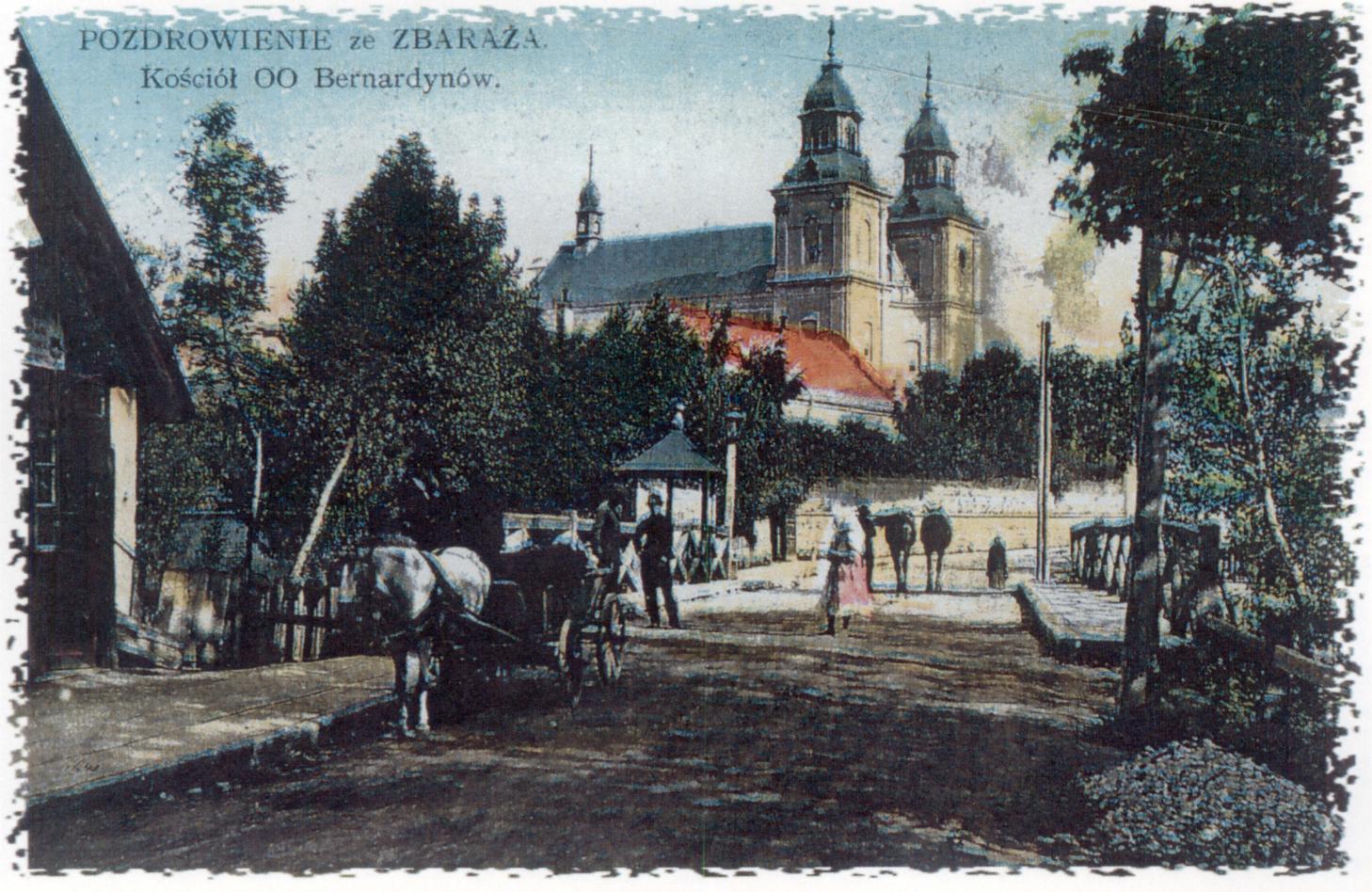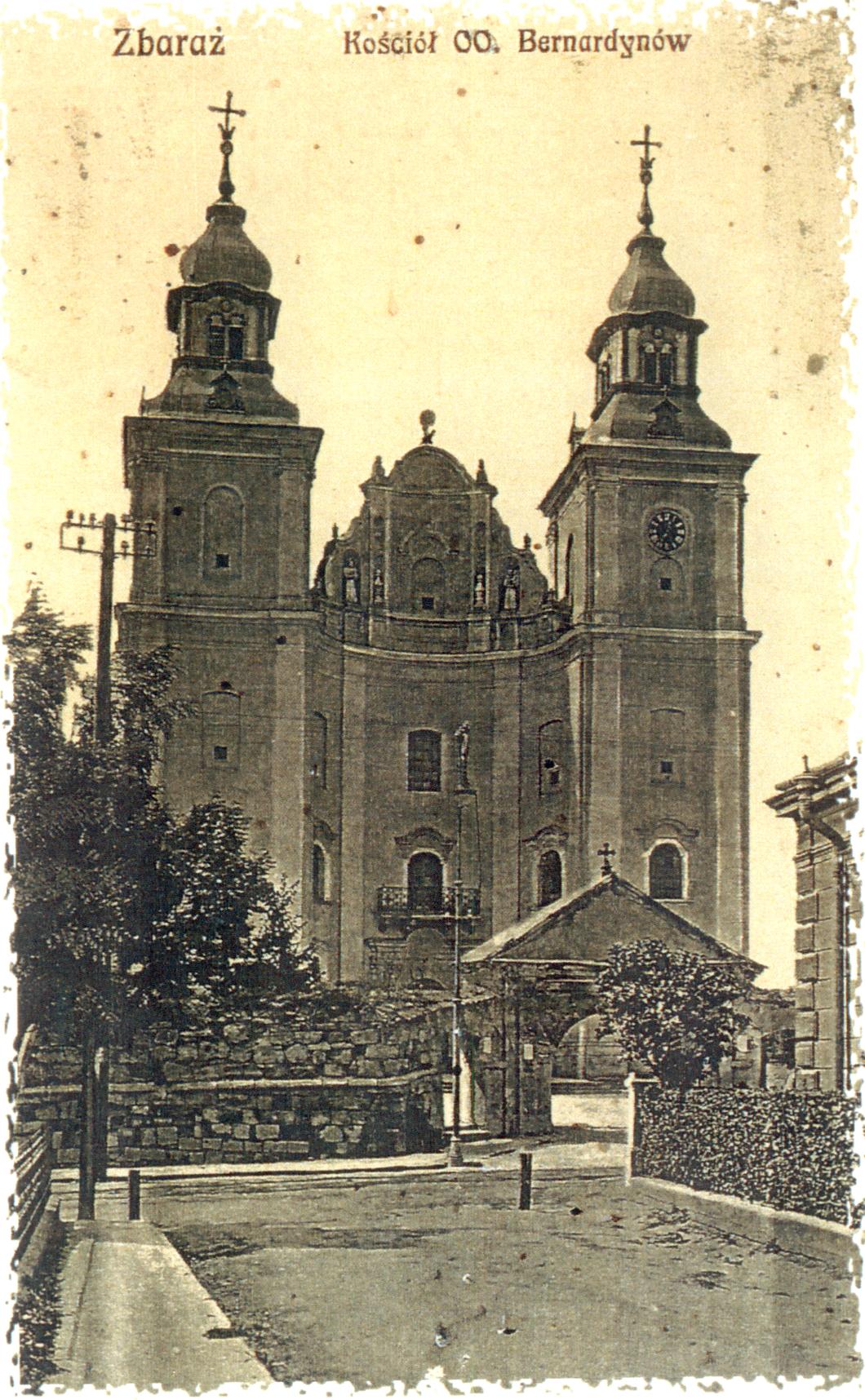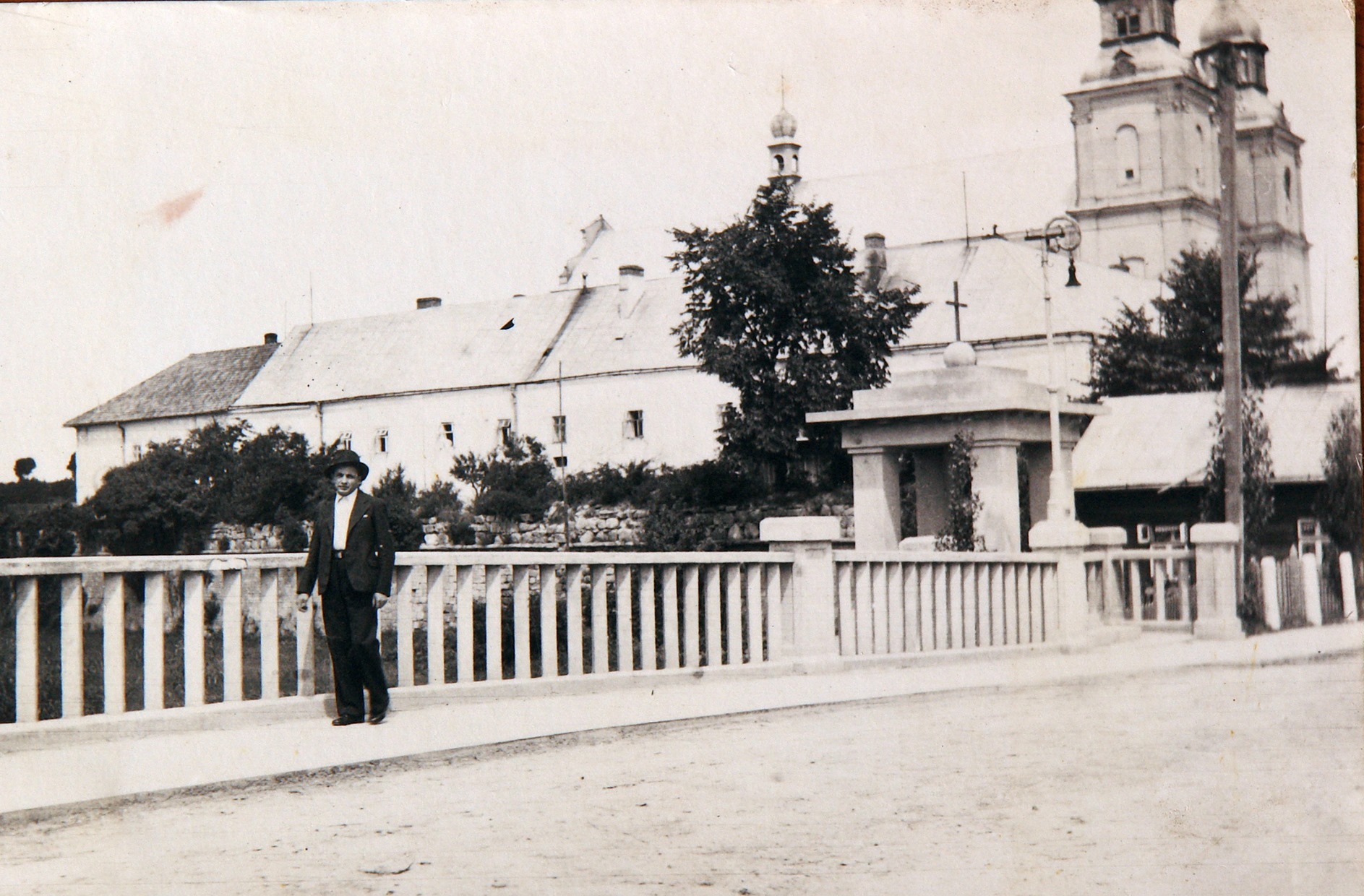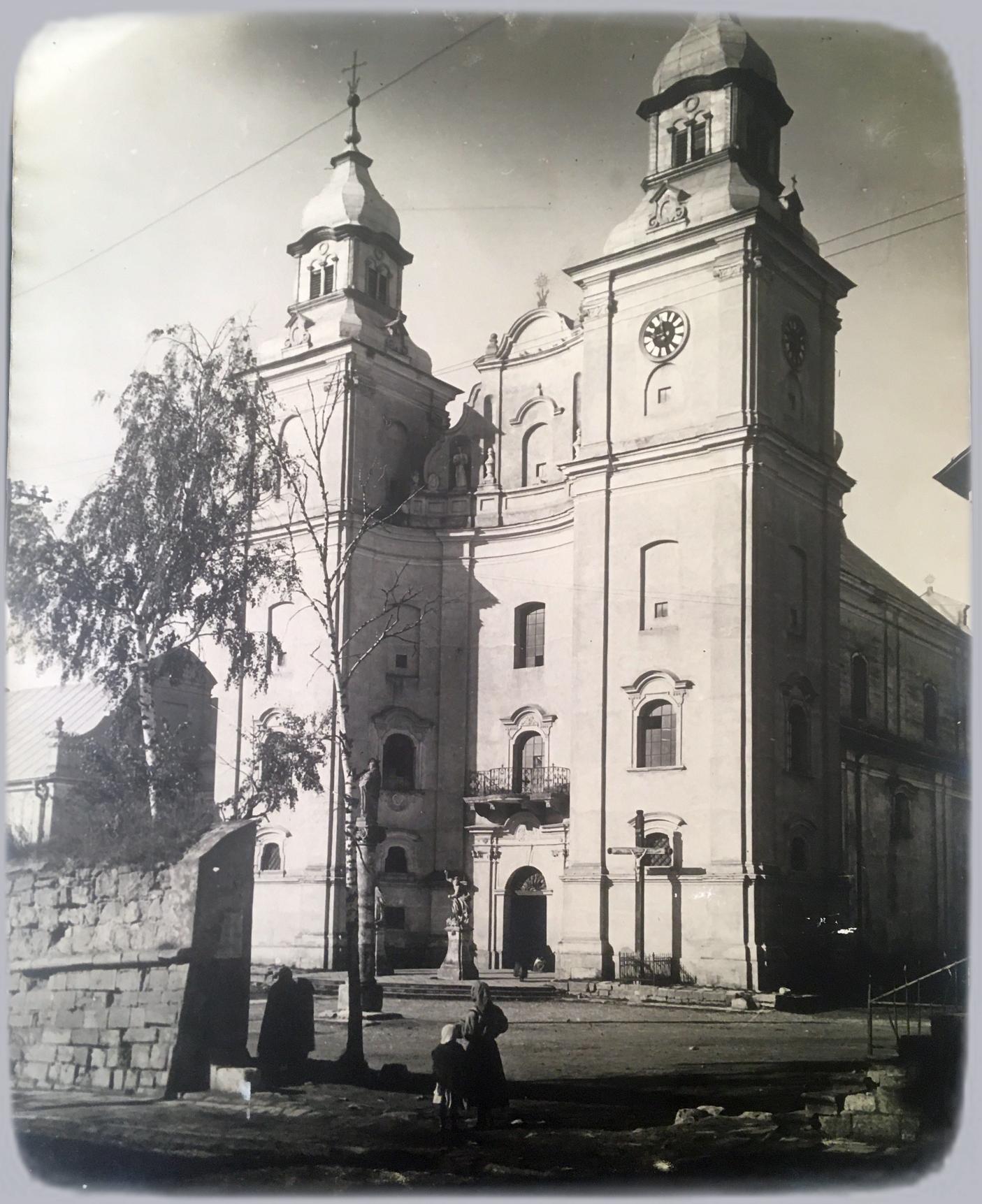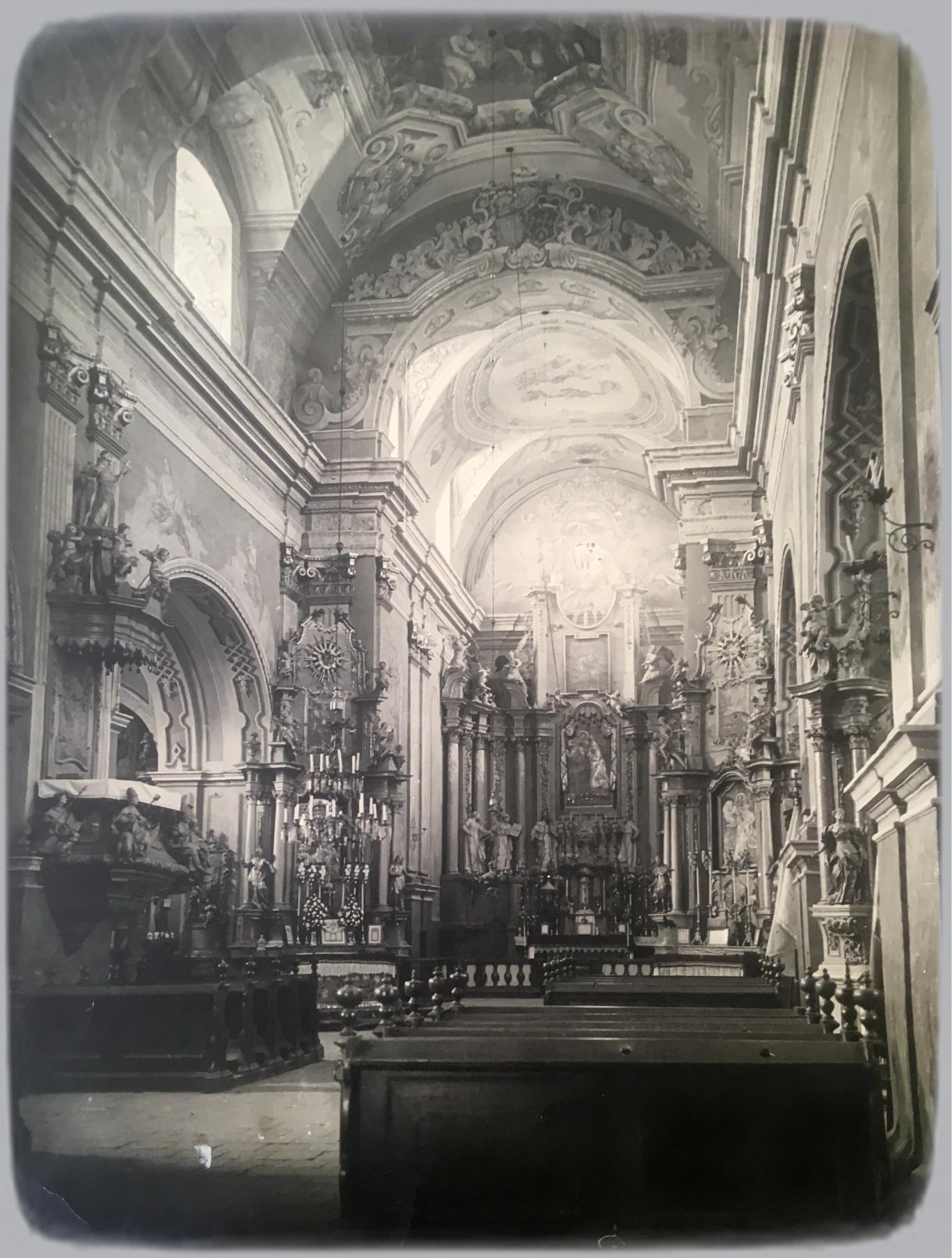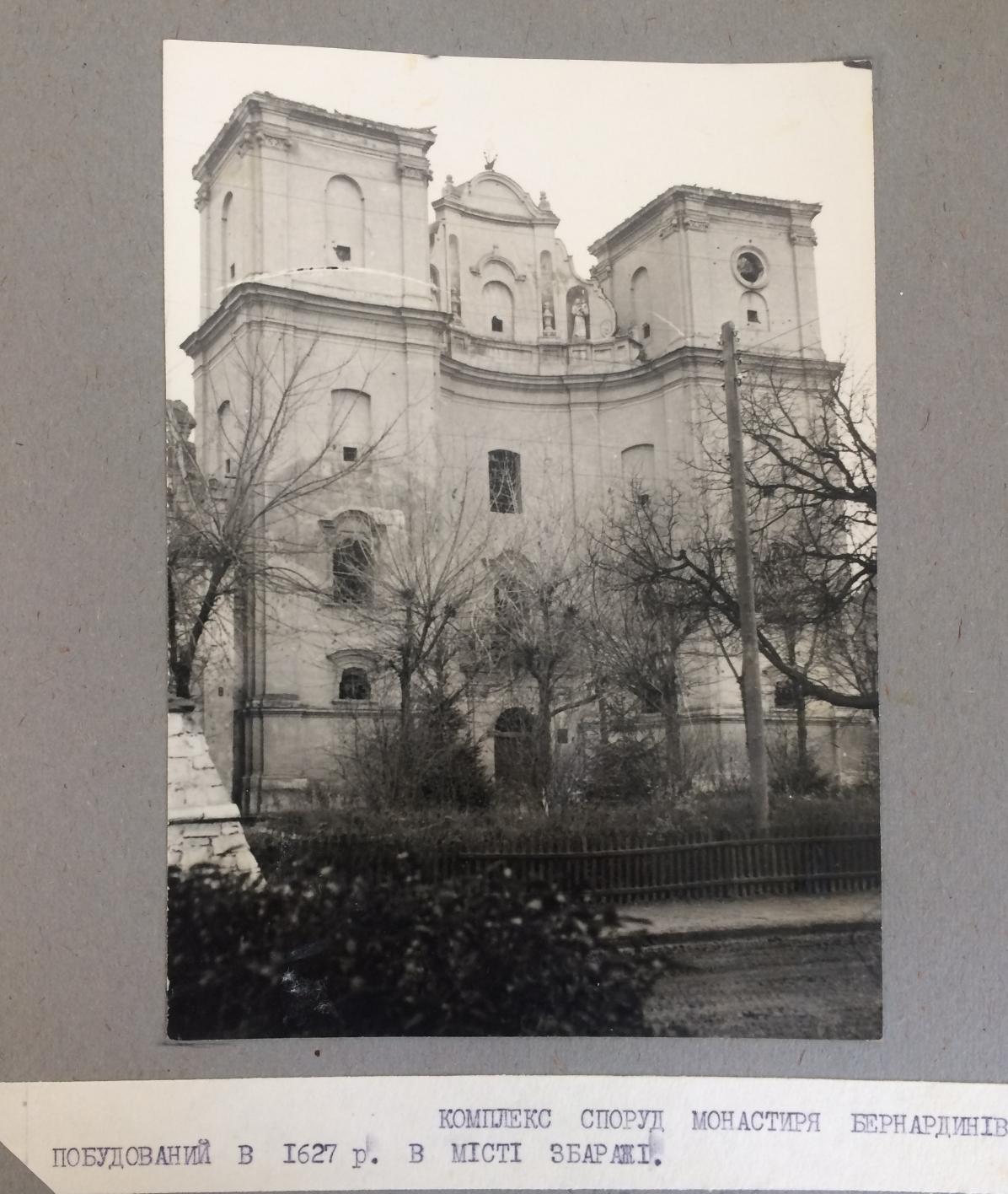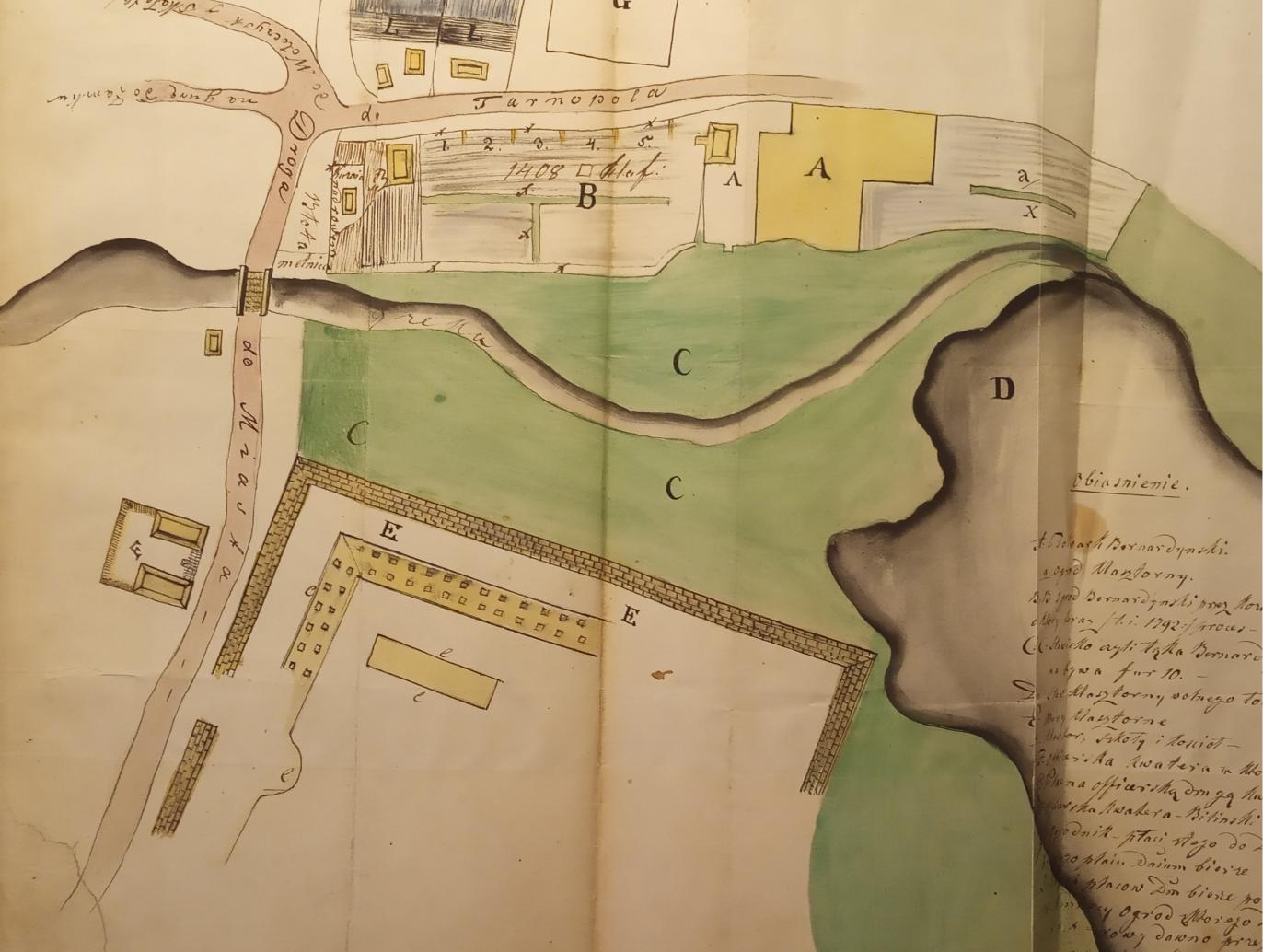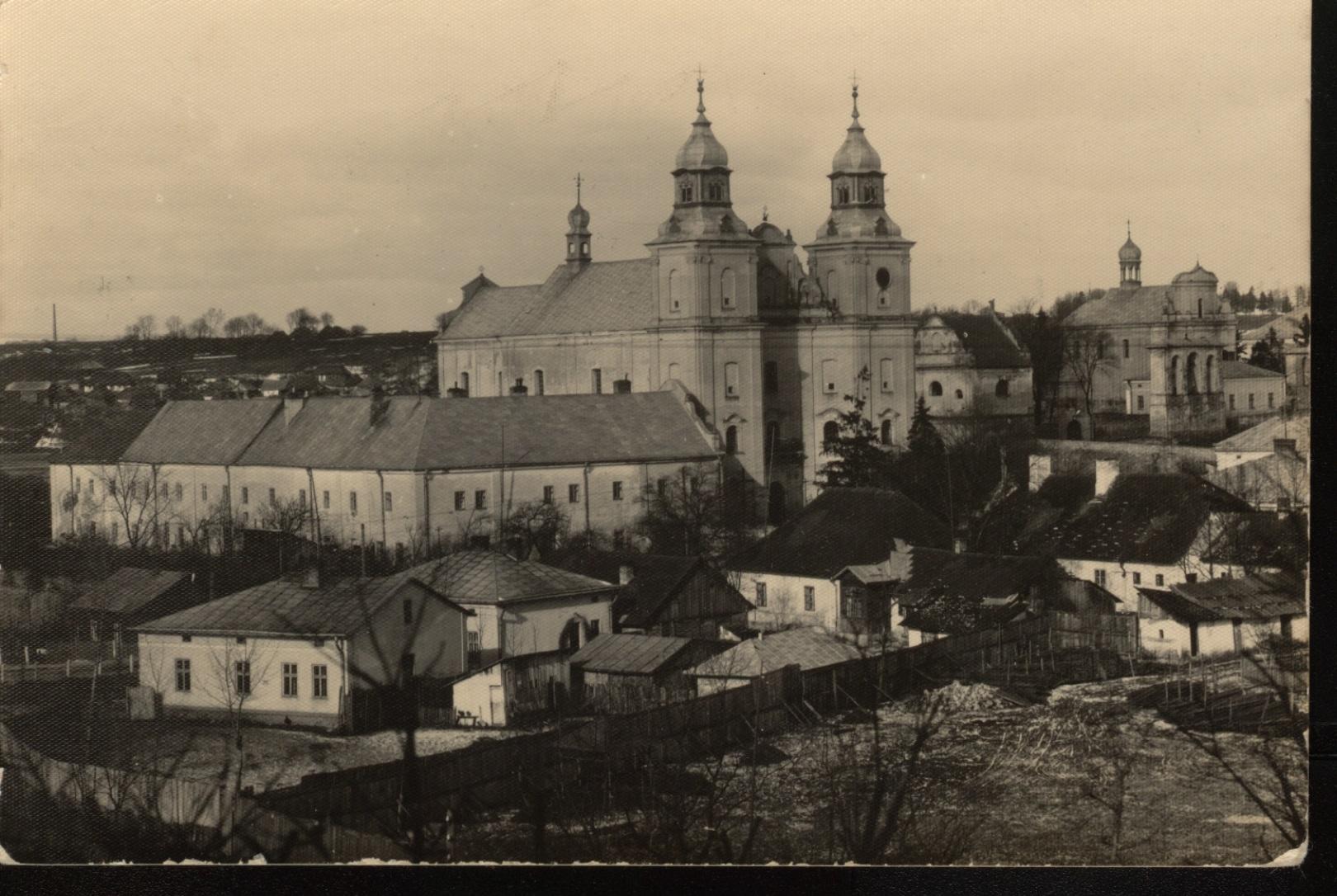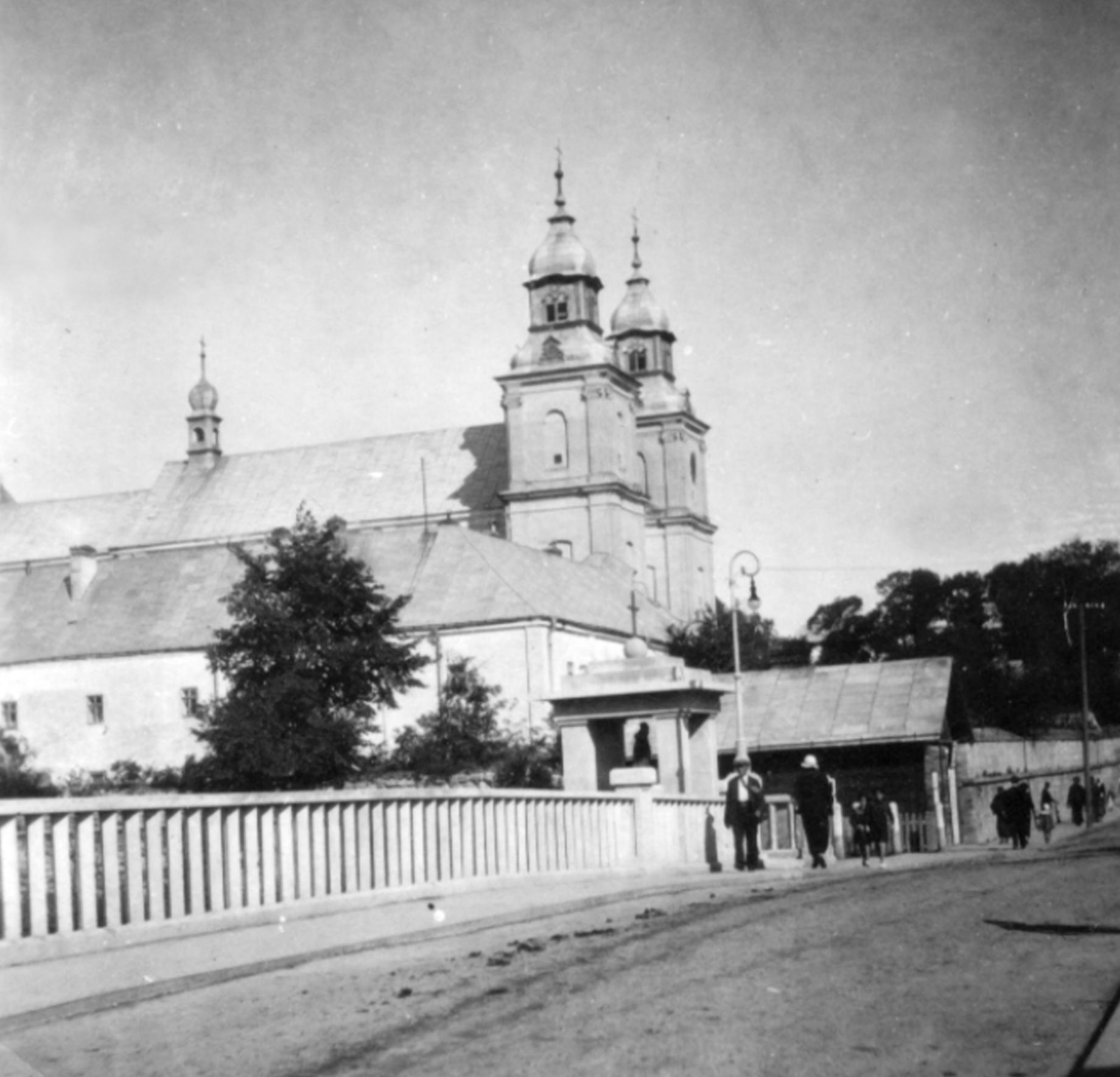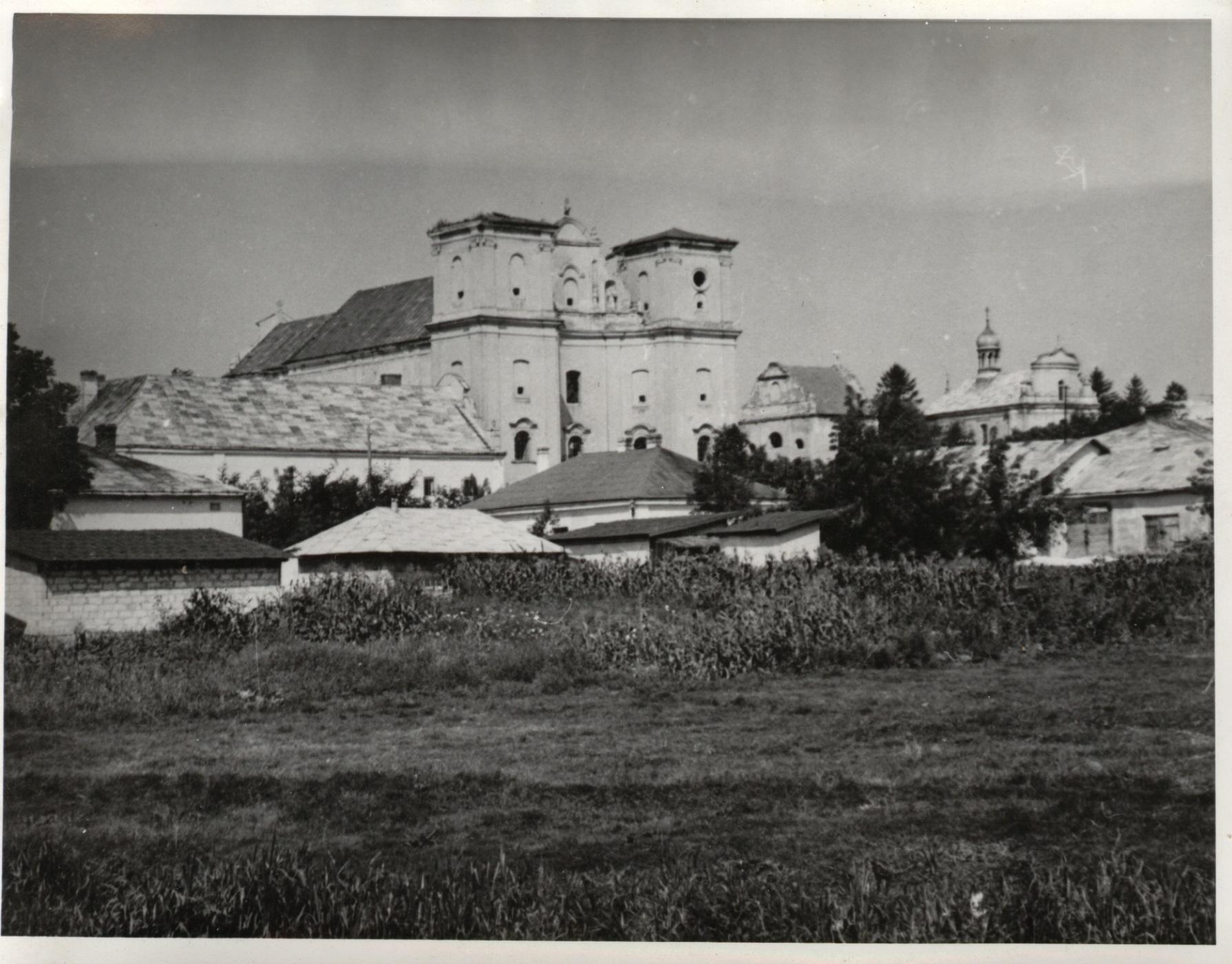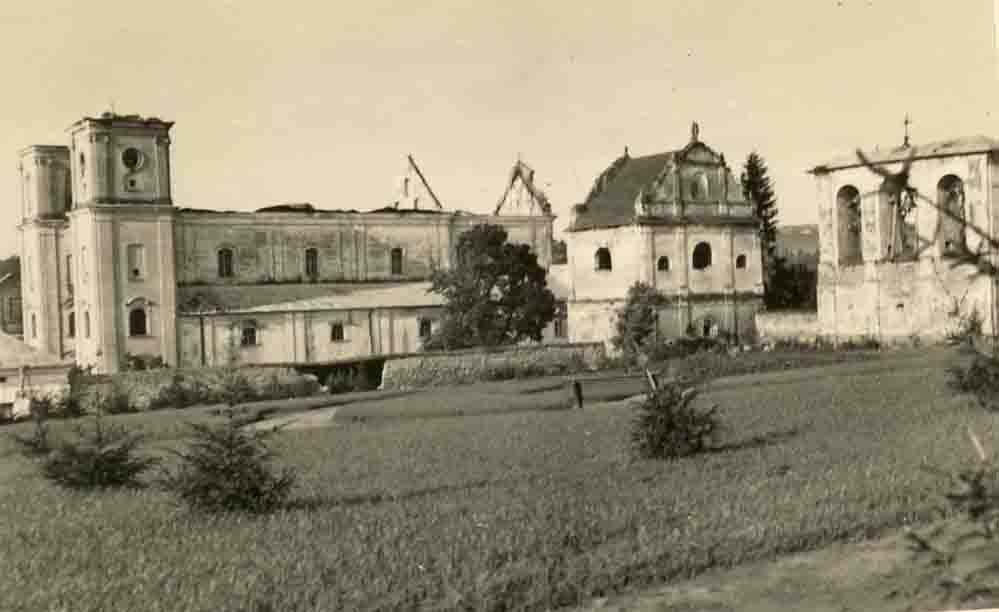
The complex essentially consists of three separate buildings—cultural heritage monuments of national significance under different protection numbers: the Church of St. Anthony (No. 662/1), the monastery cells (i.e., the monastery itself, No. 662/2), and the bell tower (No. 662/3).
The idea of introducing the Bernardine Order, popular at that time, to Zbarazh as a token of gratitude for their service as chaplains in the armies of the Zbarazh princes originated with Janusz Mykolaiovych at the beginning of the 17th century. The plan was implemented by his son, Prince Yuriy, in 1627, who allocated a space in the New Zbarazh Castle for a chapel. The plan was approved by Provincial Father Yuriy Hodzishevsky. A temporary wooden monastery building was erected in Old Zbarazh near the old church, and, with the consent of Bishop Bohuslav Radoshevsky of Lutsk, three Bernardine monks were settled there. The facilities of this sacred-monastic complex served both the residents of Old Zbarazh and the castle inhabitants. According to researcher Yu. Kahel, “…from the castle to the chapel, they crossed a drawbridge over the moat surrounding the castle walls.”
Construction of the “first” church in New Zbarazh began in the spring of 1628 at the foot of a small hill near the Hnizna River. The slightly damp soil (not a swamp) facilitated the digging of deep foundations, which included crypts for the deceased. Within three years, the underground structures were completed, and wall construction began. In February 1631, the church’s founder, Prince Yuriy Zbarazhky, was poisoned and died. By 1635, thanks to the efforts of Janusz, Prince of Wisniowiecki, the main construction work was completed, and by 1637, exterior works were finished under the supervision of Eugenia-Katerina Wisniowiecka (Tyshkevych). By April 1637, interior finishing was completed, and on May 5, 1637, the church was consecrated by the bishops of Lutsk and Kyiv under the title of St. Martyr Yuriy. The single-nave church, measuring 19 by 10 meters, contained three altars: the central altar dedicated to St. Martyr Yuriy, the left to the Mother of God, and the right to St. Anthony of Padua. In the 1640s, liturgical vestments, vessels, and furniture were acquired. While the parish church in Old Zbarazh was destroyed in 1648, the monastery church remained largely intact. However, in 1675, Turks, Tatars, and Cossacks completely destroyed it, saving only three altar paintings. The Bernardine chronicler recorded: “Kościół został obrócony w popiół” (“The church was turned to ashes”), and the general visitor of the order noted in 1687: “…Now everything is destroyed. Empty fields all around. The monastery has become a residence.” The period from 1675 to 1723 is characterized by a lack of sources.
After long disputes, Count Józef Potocki, upon acquiring the Zbarazh principality, advised the monks to begin construction of a “new” church and provided 20,000 zlotys for initial works. He himself oversaw the building of an “alternative” parish church on the so-called Fara Square, later named after King Jan III Sobieski as a tribute to his role in liberating the region from the Turks.
Only in 1746, at the initiative of Stanisław and Victoria Potocki (likely referring to Helena Zamojska, Stanisław’s second wife, and Victoria Potocka, his mother, who had passed away in 1732), did construction of the “second” Bernardine church begin, designed and supervised by Silesian architect Antoni Hantz. Works started with the dismantling of the ruined church walls and foundations, preserving only the crypt of Janusz Wisniowiecki, and excavation of new foundations and an underground crypt beneath the future sanctuary. On June 21, 1746, the cornerstone was laid and consecrated, marking the start of the “second” church.
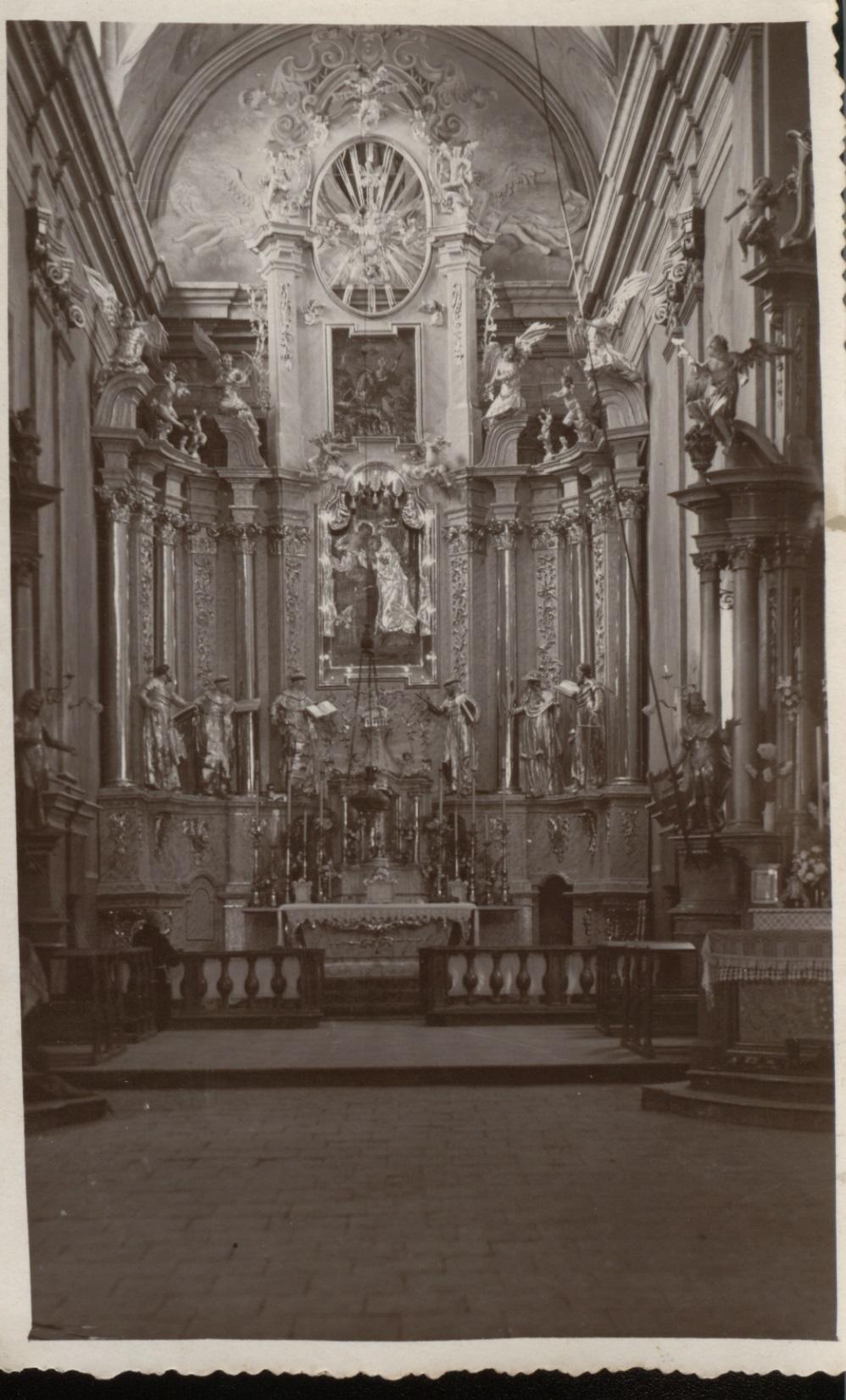
Between 1747 and 1751, the church was fully built and roofed with tiles. In spring 1752, the interior walls were whitewashed, the central altar installed, and the church opened to the faithful, though work on the choir vaults and towers continued. On July 23, 1752, the church was solemnly consecrated by Bishop Franciszek Kobielski and the main altar enshrined an icon of St. Anthony of Padua, widely venerated in the Zbarazh region. In the following year, a clock was installed in the right tower by Lviv clockmaker Jan Schoedt, funded by S. Potocki (1,800 zlotys). The left tower contained two bells, dated 1713 and 1732, and two smaller bells from the first church. In 1754, the floor was paved with black-and-white marble tiles imported from Terebovlia, and the church walls plastered. A high defensive wall with embrasures and two gates enclosed the church-monastery complex. Research does not confirm Yu. Kahel’s statement that “the walls were about 3.5 meters high and built of brick.”
On August 1, 1755, the church was solemnly consecrated by Bishop Erasmus Wolowicz under the title of St. Anthony. Between 1865 and 1866, the interior frescoes and ornamentation were executed by Andrzej Kaczmarczyk from Krakow and Jan Dul, and at the turn of the 19th-20th centuries, frescoes were restored by Lviv artist Józef Shidłowski at a cost of 12,000 zlotys. Yu. Kahel noted that the church was, in a sense, a copy of the parish sanctuary, with the same number of altars dedicated to the same saints and similar frescoes on the arches.
By the mid-19th century, the monastery housed not only the cells and library but also a primary school, classical and public gymnasiums, a casino, offices of the county government, and a city reading room. The monastery rented out these premises practically until 1939.
However, the monastery’s history also includes less favorable periods, particularly when military hospitals and infirmaries were temporarily established in its premises. On November 28, 1837, military commissioner Władysław Ludwig and manager of the Potocki estates, Franciszek Dembiński, requested the monastery guardian, Father Jaczek Sheligevich, to allocate part of the monastery for a military hospital in case of war. The rent set by the Bernardines was deliberately high, and the military withdrew. Similar attempts occurred in July 1866 and November 1880 under the Red Cross.
During World War I, the Russian occupation authorities billeted dragoon squadrons in the monastery, violating its legal order with tacit consent from city authorities. Monks were subjected to imposed contributions, searches, and the monastery was repurposed as a military hospital. Valuable items were damaged or stolen, and temporary use of the premises continued into late 1916, including as a venereal hospital. In August–September 1917, Russian forces again occupied the monastery, provoking attacks and setting fire to parts of the property. They finally left Zbarazh on November 2, 1918.
After World War II, the church and monastery premises housed a hospital (relocated in 1969) and the Kvantor factory.
The Bernardine monks returned to Zbarazh in 1990. From mid-1994, renovation was led by Brother Maksymilian Jidowski. All services were held in a temporary side chapel. In early August 1997, the monastery roof mysteriously burned down, forcing the monks to relocate to a private house near the church. In 2000, Cardinal Marian Jaworski solemnly consecrated the church. Since then, services during the summer have been held at the main altar. Today, the church, as a cultural heritage monument, is managed by the National Sanctuary “Castles of Ternopil,” while the monastery is leased to various state institutions and organizations of the Zbarazh community.