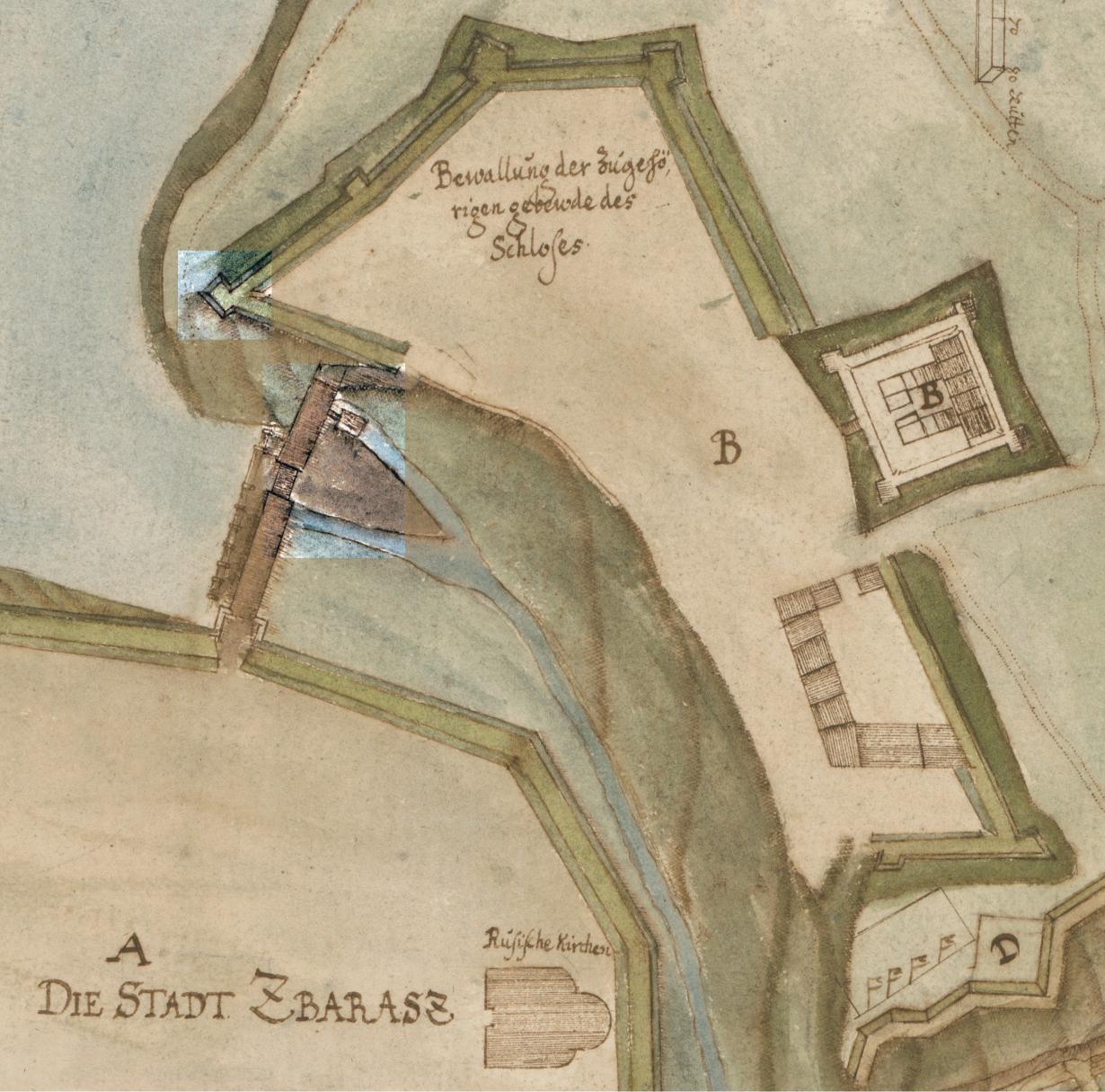
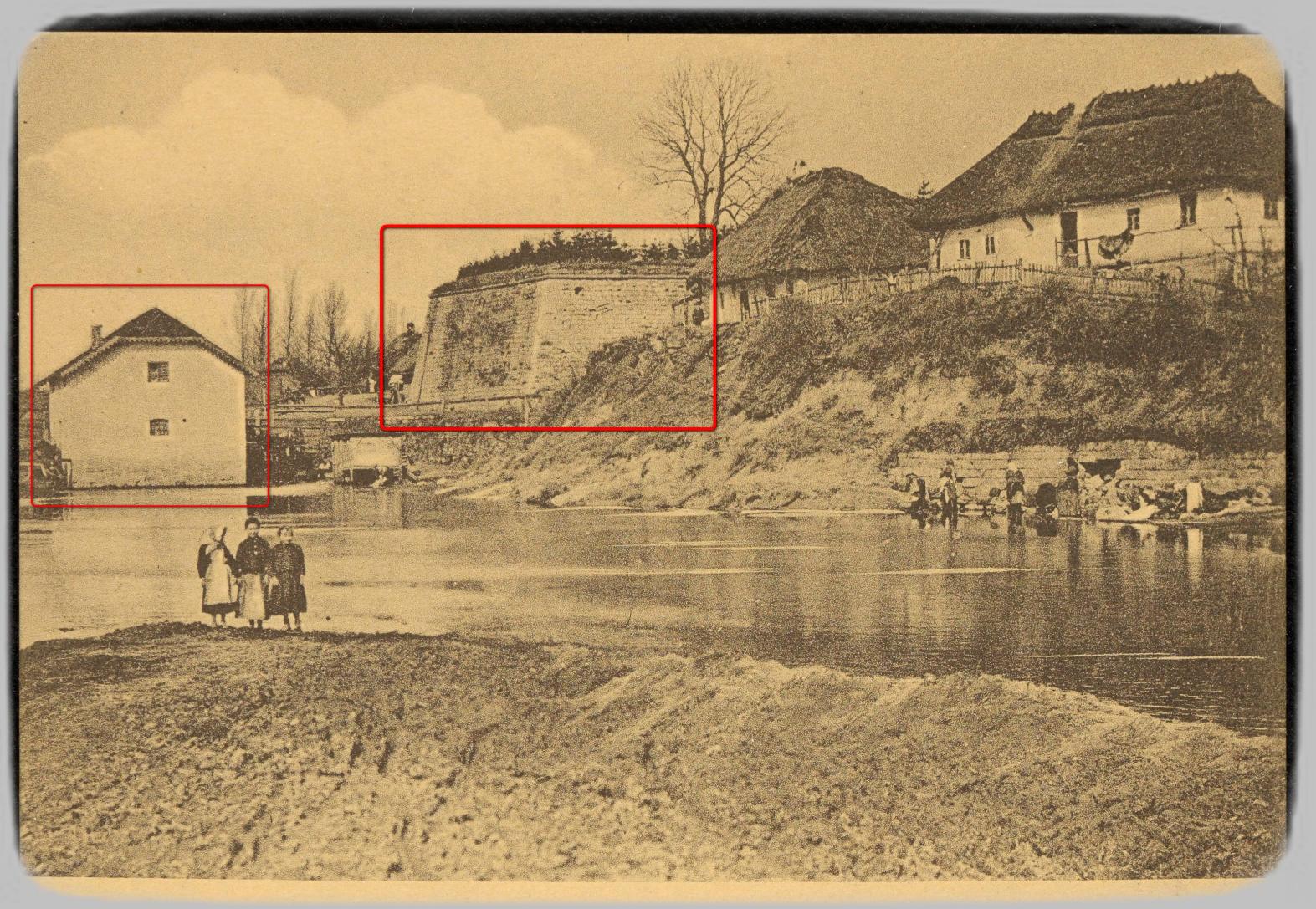
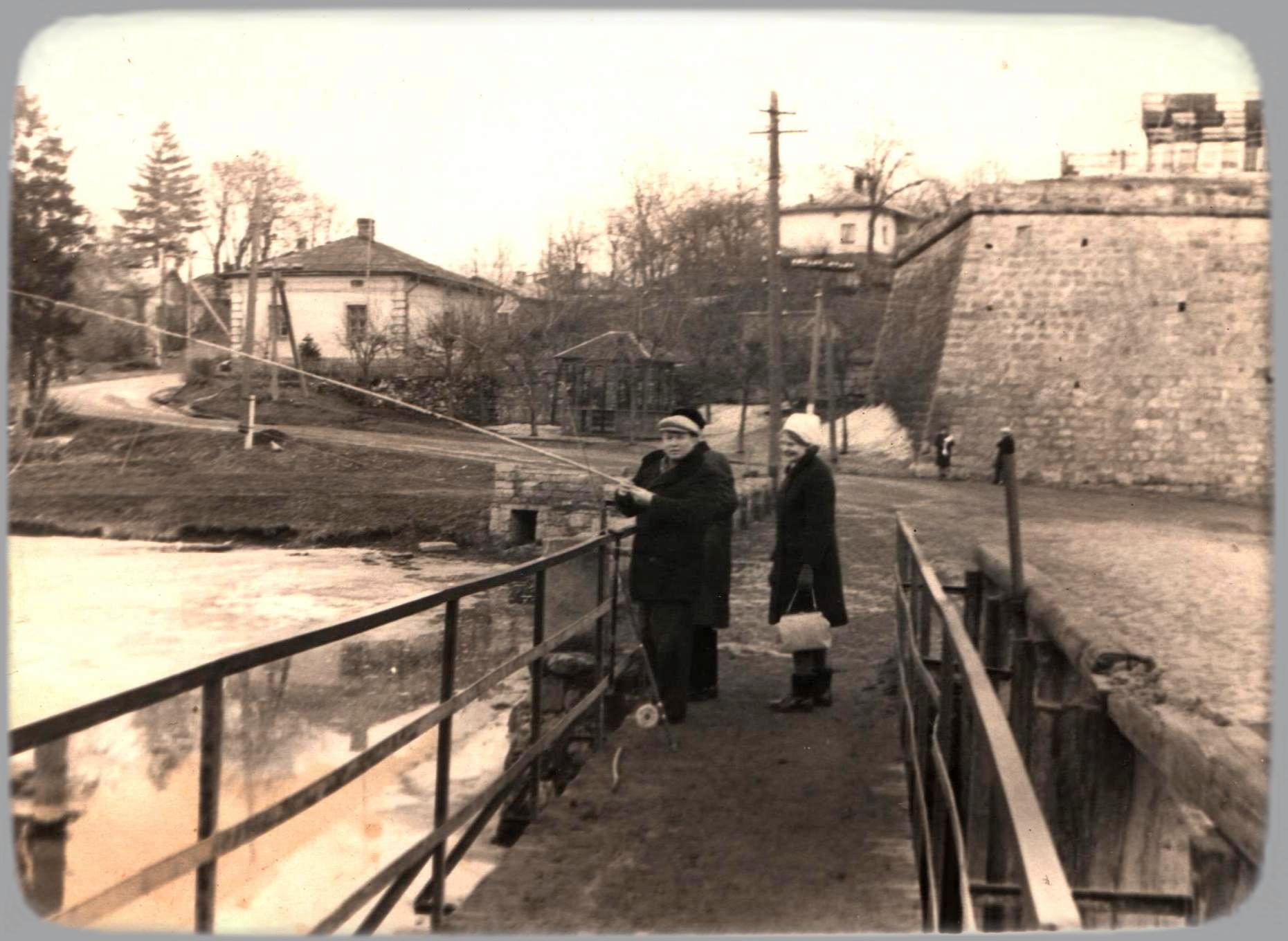
The architectural origins of the milling industry in Zbarazh date back to the early 18th century, although on the so-called “Berlin plan” of the siege of Zbarazh in 1649 a mill is already shown near the “Swan” bastion. At that time, mills were usually wooden structures by the river with water-powered mechanisms. It is not surprising that after the burning of the town by the troops of Ibrahim Pasha Shyshman and Petro Doroshenko in 1675, the construction of mills had to start anew.
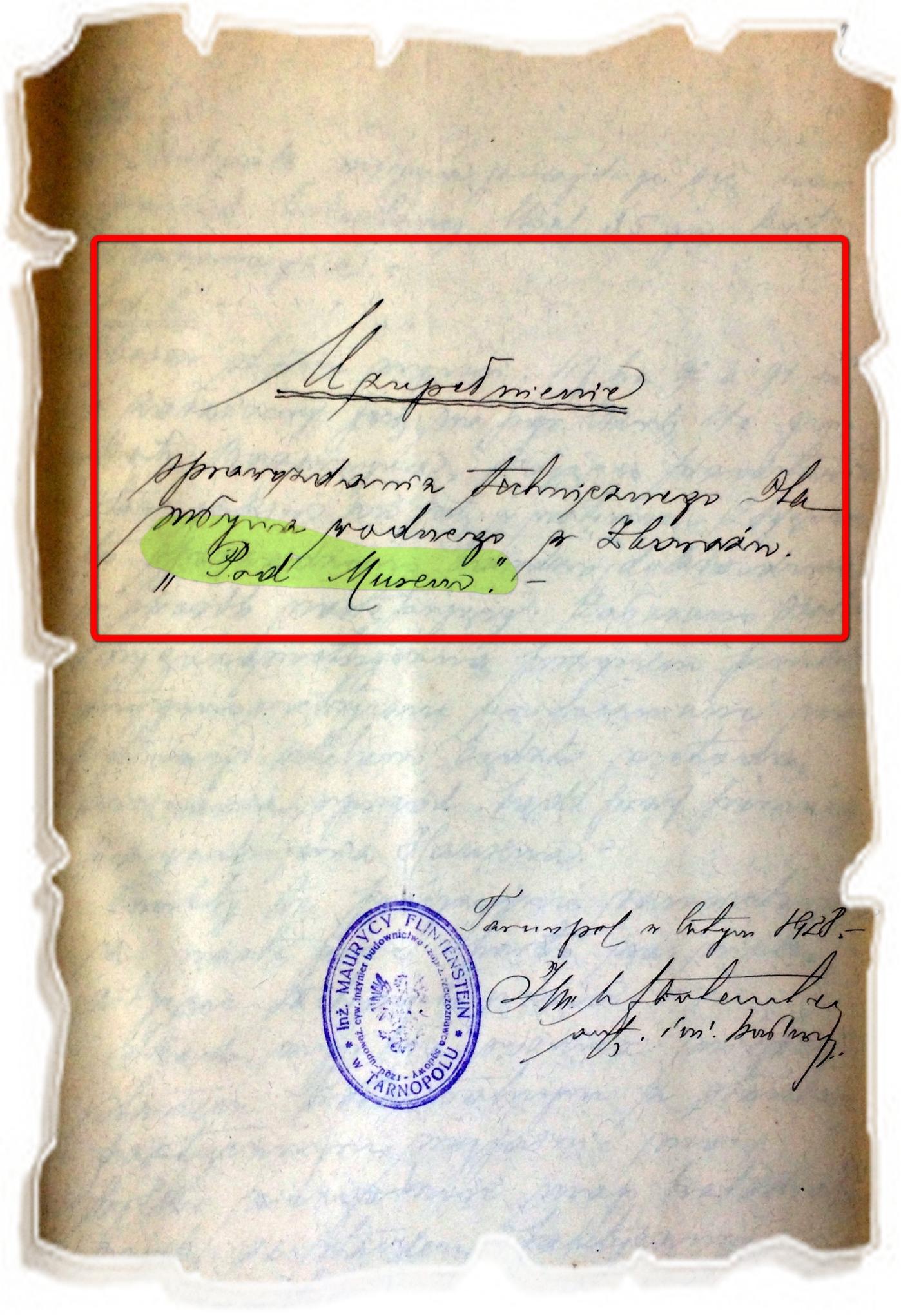
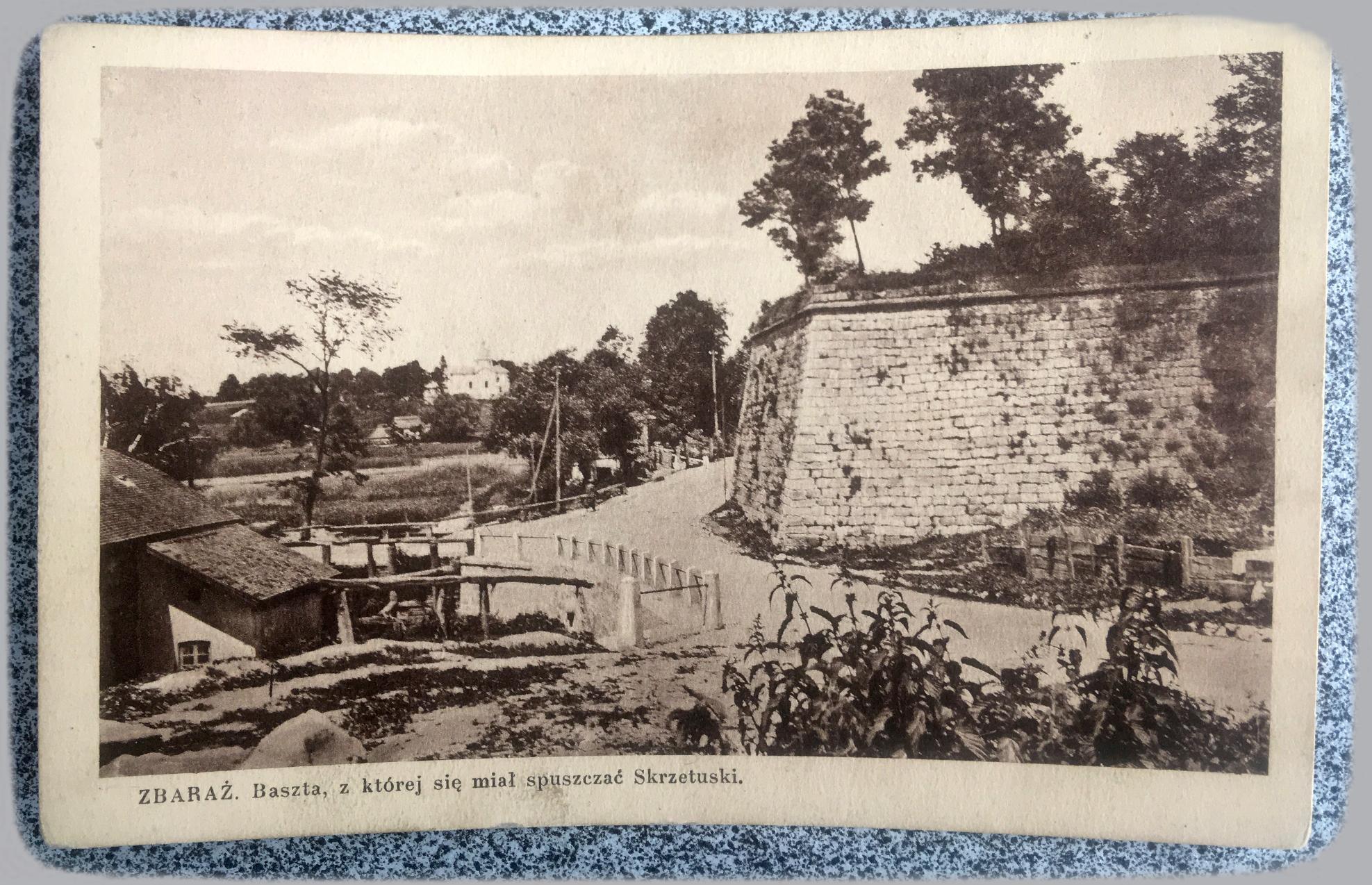
Retrospective references to milling in the Zbarazh area mention a mill in 1688 leased by a certain Lesko Melnyk. In 1717, one of the Zbarazh mills belonged to Prokop Khmilnyk and the brothers Ivan and Stepan Melnyk. In 1756, there was a mill in the Zaliztsi suburb owned by Stecko and Ilko Melnyk. Unfortunately, it is now very difficult to localize these mills, especially the one in the Zaliztsi suburb. During the Austro-Hungarian period, sources record mills (Mühlen) in Zbarazh: Biller E. D. / Israel Perel (tenant) / Zakharasevich; in Zaluzhzhia a turbine mill leased by Moses Axelrod, and in Staryi Zbarazh a mill owned by Moses Eisenberg. Polish periodicals of the interwar period mention the mills of E. D. Biller, “Pid Murom” (owner Yawec E.), K. Zakharasevich & Co. In this list, the “Pryhorodetskyi” mill was named “Pid Murom” because it was indeed located under the outer defensive wall of Zbarazh Castle. The “Plan” of Zbarazh by Ya. Buchynskyi calls it the “Water mill (under the wall)”.
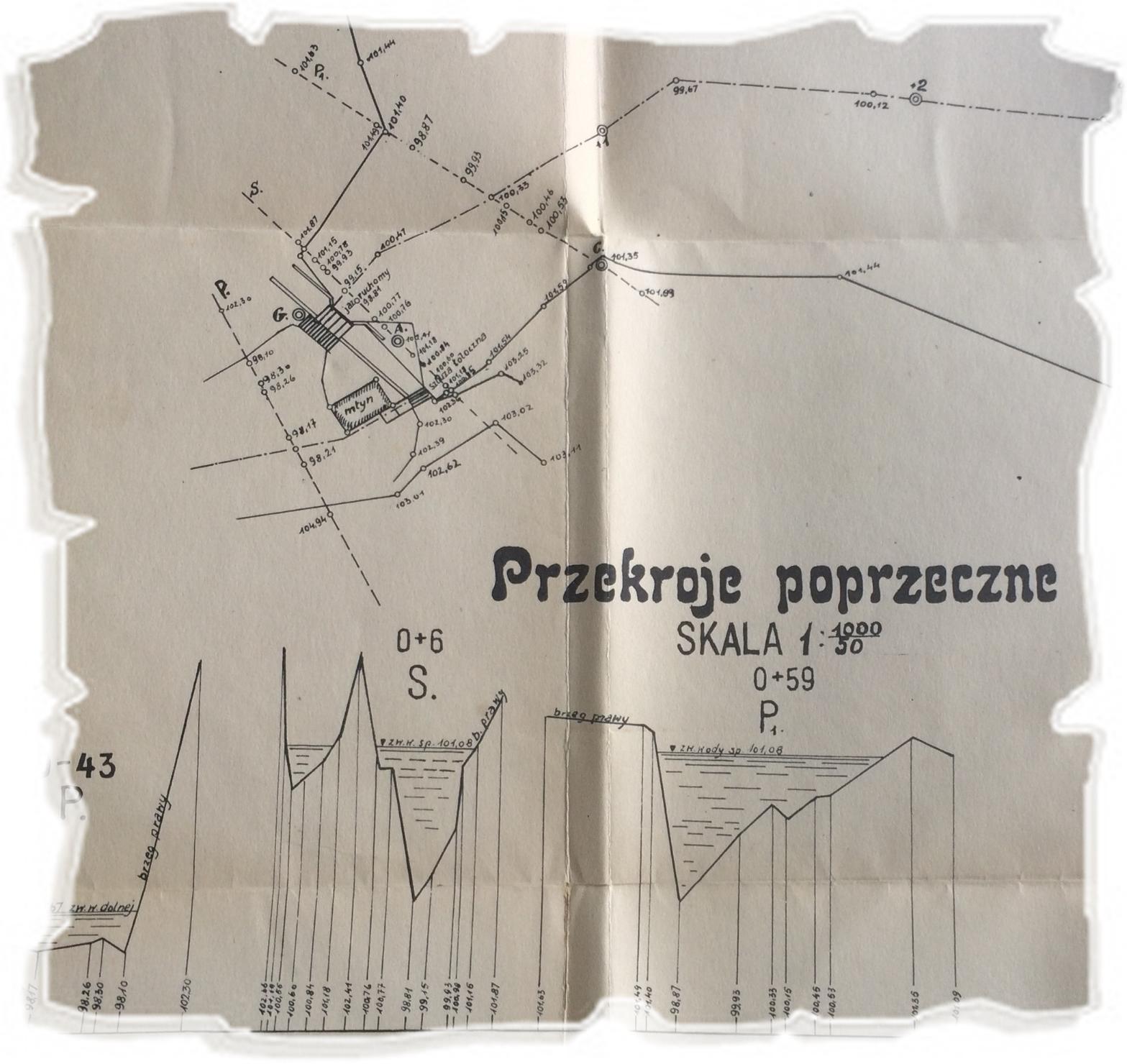
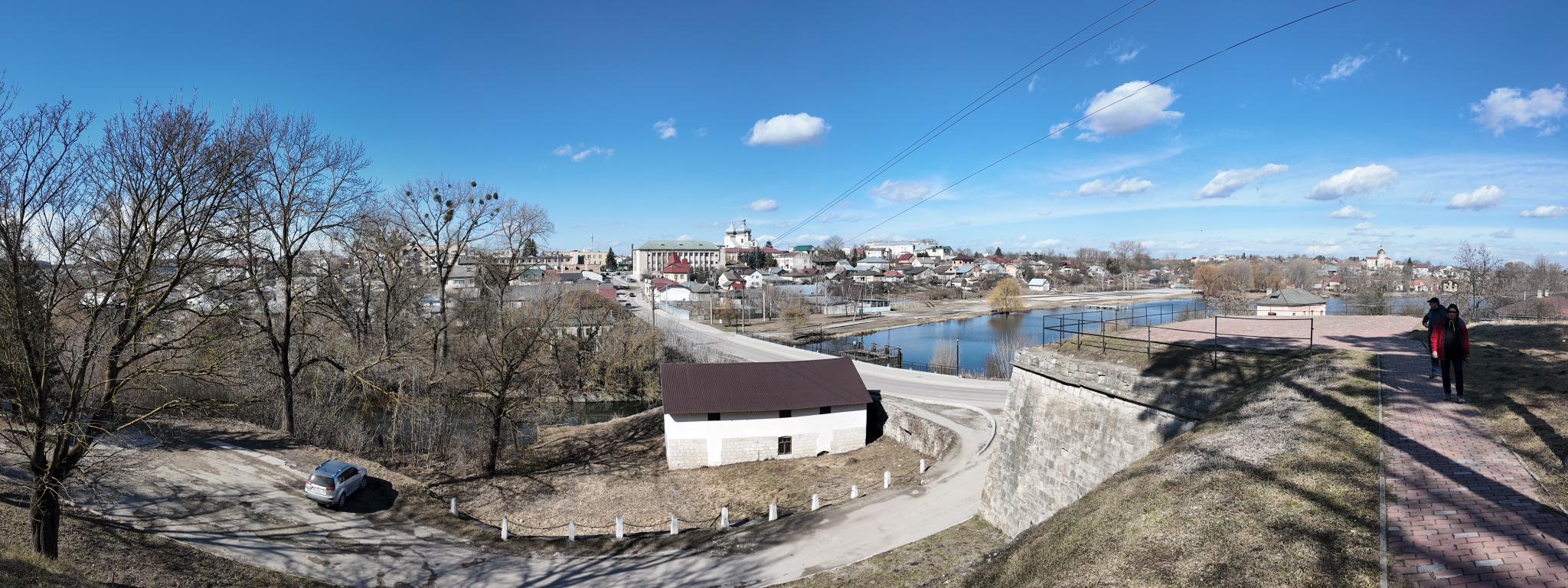
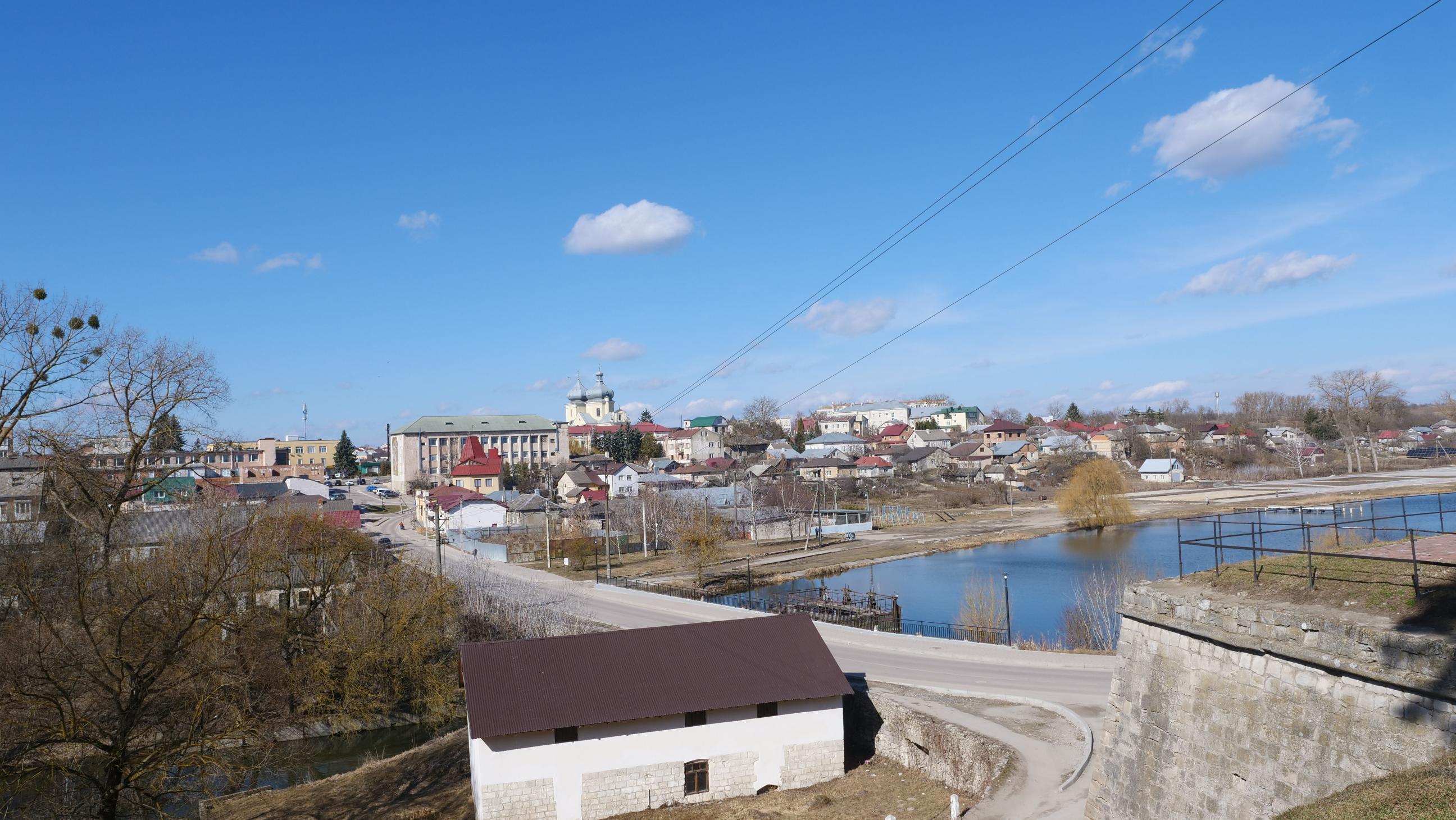
At 8 Danylo Halytskyi Street in Zbarazh, near the dam on the Hnizna River, stands a cultural heritage monument known as the “Mill” (heritage protection no. 156-M), popularly called “Pryhorodetskyi” because it was located in the Pryhorodok area. The “Historical Monument Passport. Brief Information” states that the building was constructed of stone and brick in 1780 under V. Potocki on a new dam, modernized in 1867, and in 1912 a turbine was installed. In 1925 a dynamo machine was added to provide lighting for the townspeople’s houses for a fee (operated until 1939). In 1950 the mill building underwent major repairs and housed a carpentry workshop, which was closed in 1960. In the 1990s it was partially restored. Today it belongs to the National Reserve “Castles of Ternopil Region” and has undergone external restoration.
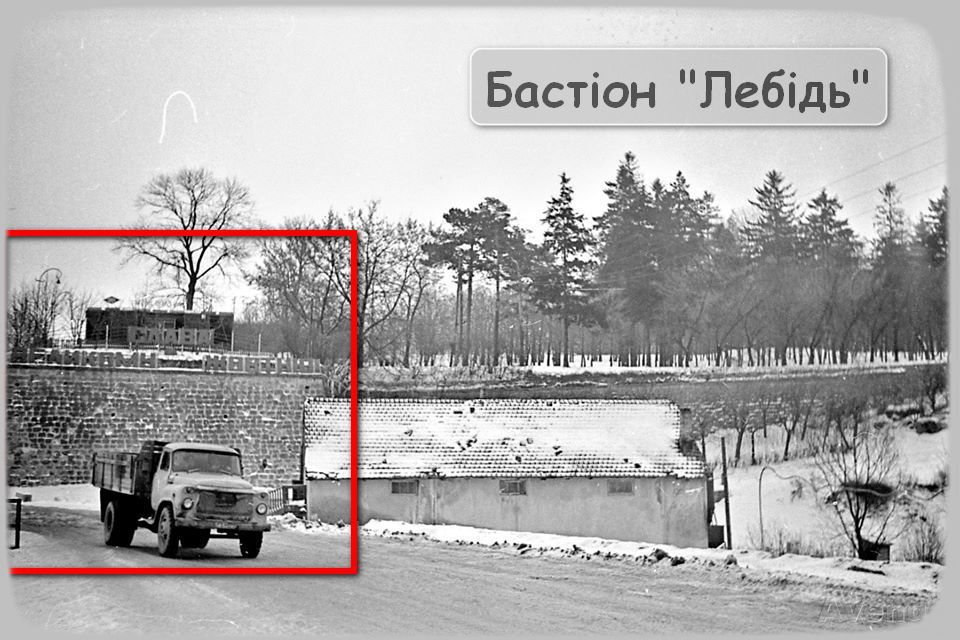
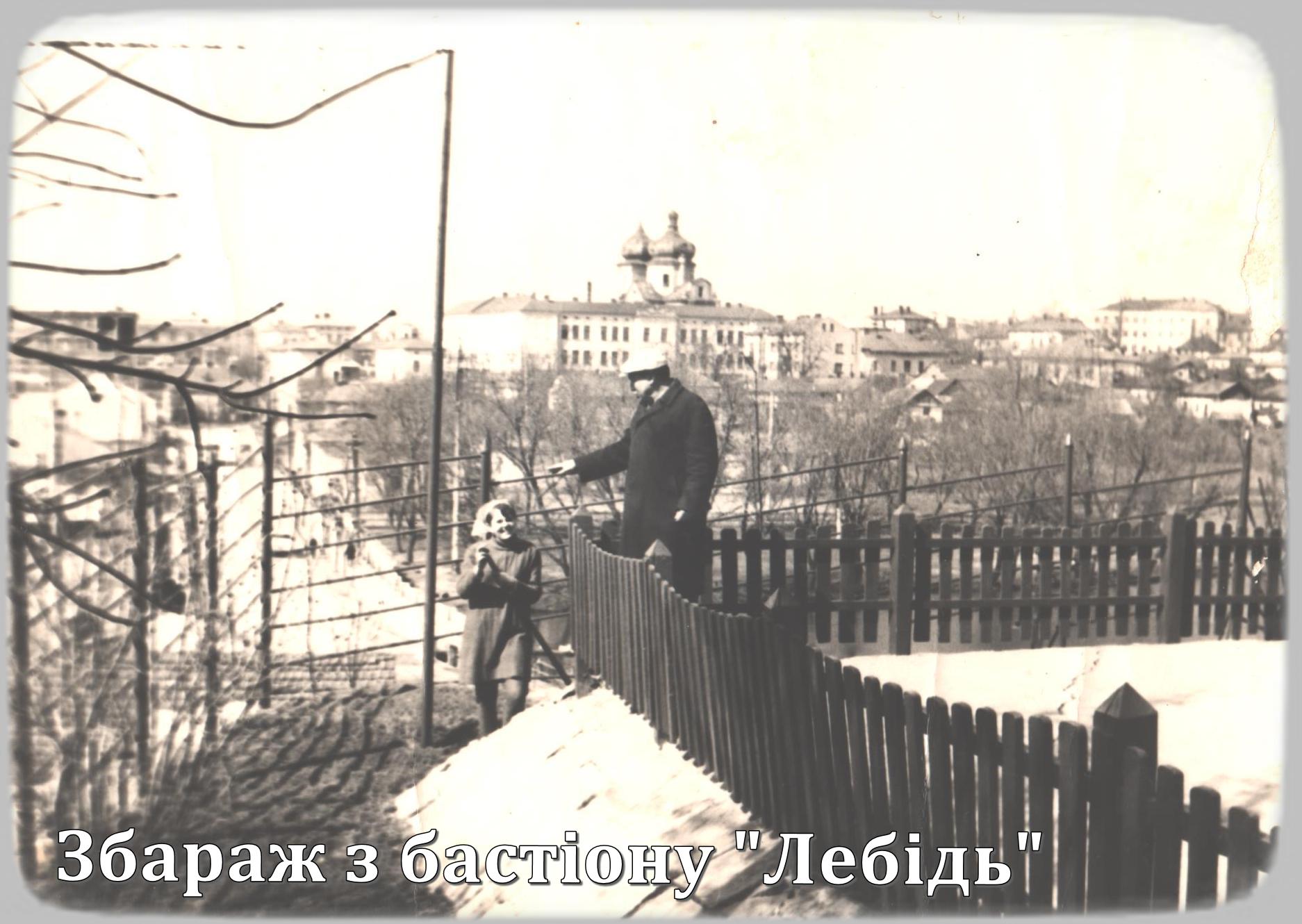
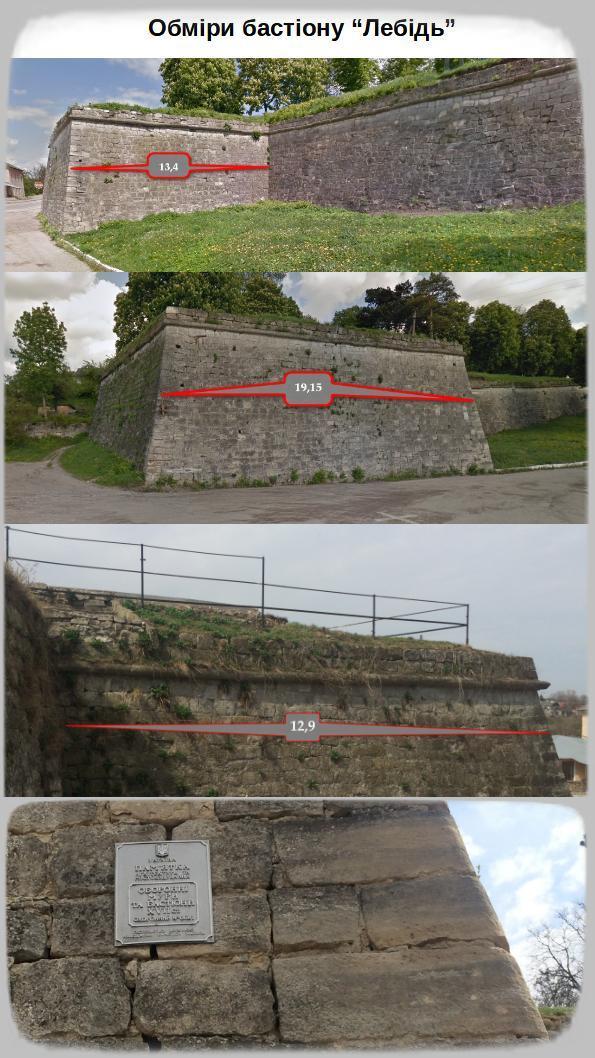
The “Swan” Bastion. In the 1970s–80s, this defensive fortification of the outer stone walls of the castle, located on present-day Danylo Halytskyi Street, was very popular among locals. On the terrace of this bastion there was a café called “Swan”, where both residents and visitors of the town could “relax body and soul” during the period of “developed socialism.” The site is a national cultural heritage monument (no. 661/1) under the name “Defensive walls and bastions of the 17th century.”
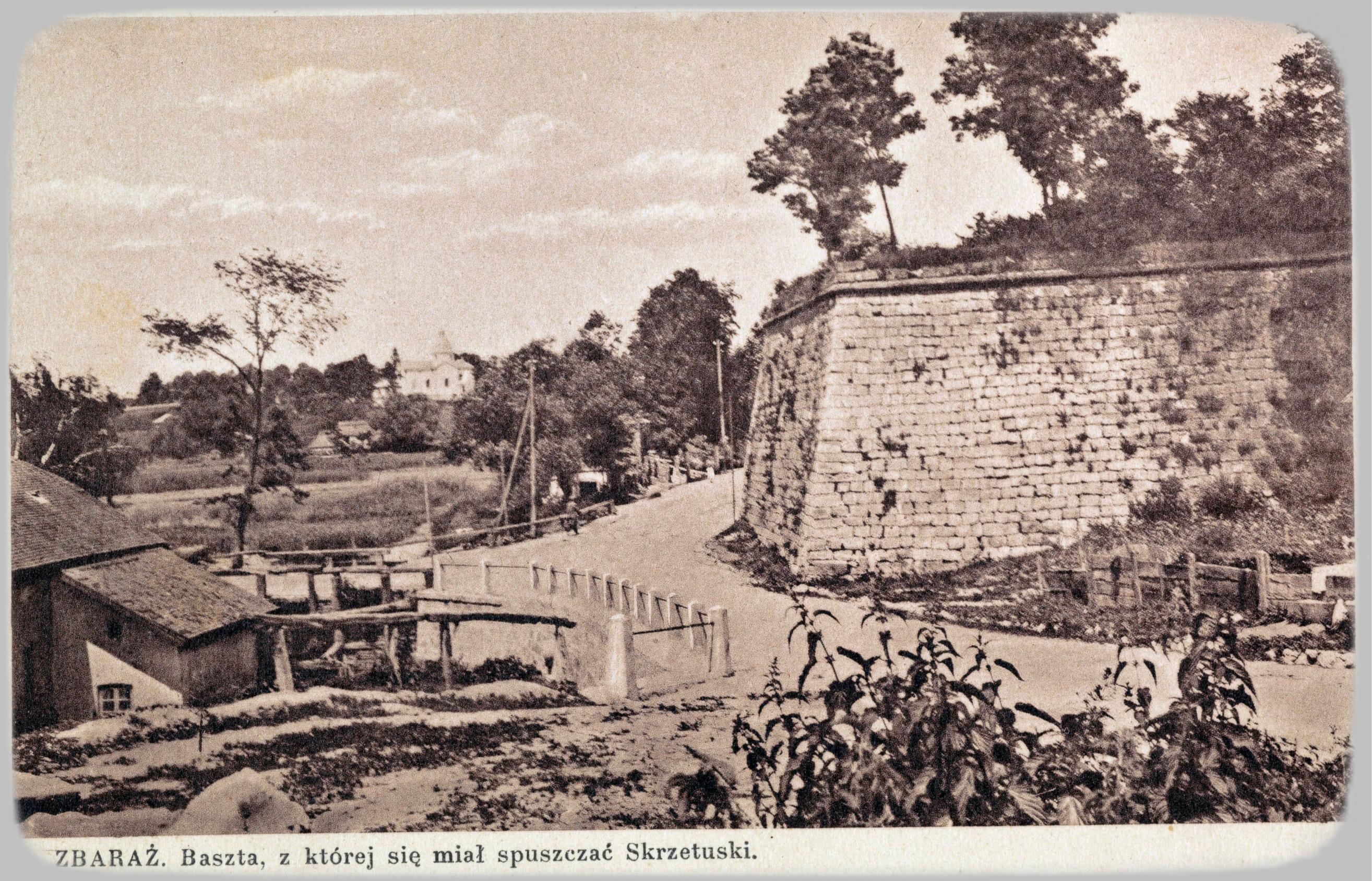
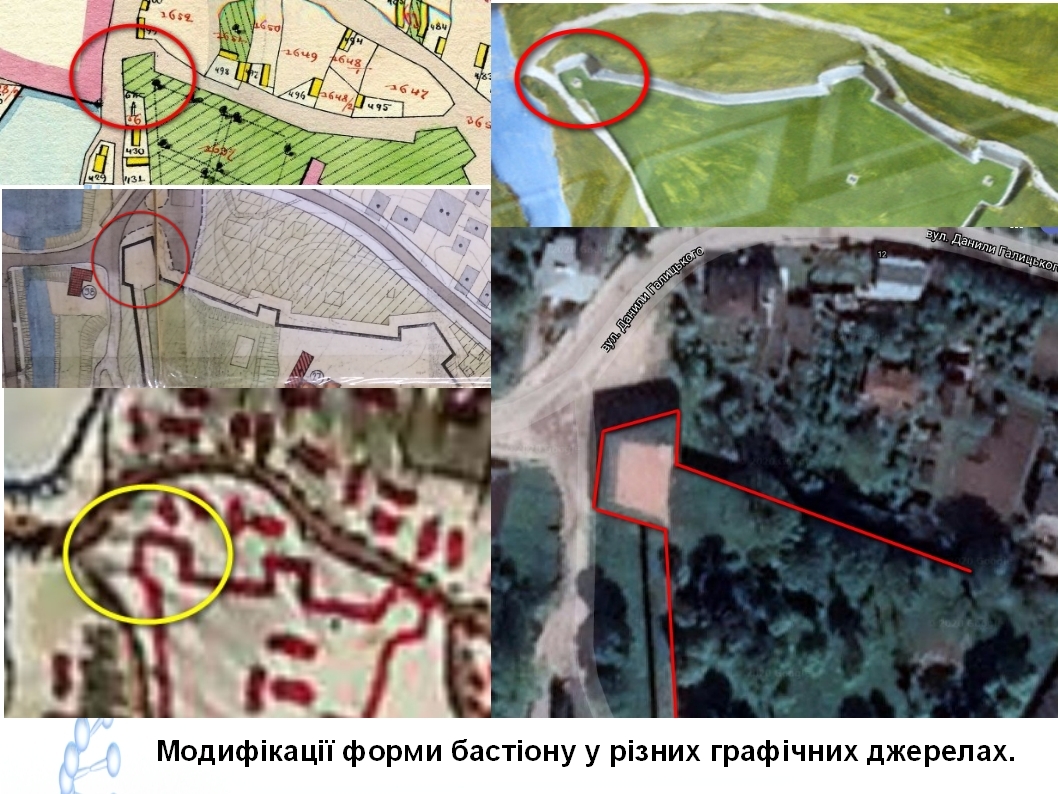
The location of the bastion directly by the dam (which formed the Bazarynets pond) was dictated by the need to defend this strategic facility that controlled access to the suburb of the town from the northeast. The construction of the bastion, like the rest of the perimeter, can be approximately dated to the mid-17th century (before 1649). The first confirmation of its existence is found on the “Berlin plan” of the siege, later on the map of von Mieg (1779–1783), the cadastre of 1830, and subsequent cartographic materials.
The function of the bastion was to provide frontal fire on the approaches and flanking fire along the adjoining curtain walls; in particular, to protect the dam and flank the western curtain leading to the entrance gate of the outer defense perimeter. Since the bastion lacked embrasures and loopholes, fire was most likely conducted from earthworks above.
It is likely that the integrity of the fortification was not disrupted during its history, so the bastion has survived to this day in its original form. After certain not-so-pleasant events, the “Swan” café was closed, the wooden stairs decayed and were dismantled, and the terrace was turned into a beautiful observation platform for panoramic views of the town and the pond. The object remains unchanged, although everyone who remembers the “Swan” has their own personal stories connected with it.