
REMAINS OF THE OLD ZBARAZH FORTRESS
“Chronicle Zbarazh” was a settlement and borderland administrative-fiscal center of the Terebovlia Principality in the Podillian land, located within the Medobory Mountains of the Zbarazh subregion of the Tovtry Ridge. By tradition, the term “Chronicle Zbarazh” refers to the territory of the Knyazha, Babyna, and Chernecha (popularly known as Monastyrok) hills, not only in the “chronicle” period of the 13th century but also in the following centuries (15th–16th).
The earliest known written reference to the settlement Zbyrazh (this being its transcription in one of the sources) is found in the Galician-Volhynian Chronicle. It recounts that in the spring–summer of 1214: “…Leszko could not capture Halych, and, departing, he ravaged the surroundings of Terebovlia, Moklekiv, and Zbarazh, while Bykoven was taken by the Poles and the Rus’.”
The fortified center was located on Knyazha Hill, where initially a Slavic fortification stood, later replaced by one from the Princely era. By the first third of the 15th century, a castle already existed here. The earliest written reference to it appears in a letter of complaint by King Władysław Jagiełło of Poland to Grand Master Russdorf regarding the treacherous and inhumane actions of his own brother, Grand Duke of Lithuania Švitrigaila. Published in Skarbiec Dyplomatów (ed. I. Danilowicz, No. 1554), it states: “…he seized our castles during the truce, having unsuccessfully besieged Smotrych for eight days, he attacked our estates in the Terebovlia and Lviv lands and, through his supporters– our rebels– captured and held the castles of Zbarazh, Kremenets, and Olesko.”
On 24 June 1474, the castle in Zbarazh was captured and burned by the Tatars under the command of Heydar Giray. Prince Vasyl Vasylovych Zbarazky perished in the flames, setting fire to the fortress, most likely wooden, while his wife and children escaped. In the fifth volume of Twelve Books of Polish History by the Kraków canon Jan Długosz, published in 1870, the words “ZAMEK ZBARAŻ” appear in this context.
The fortress again suffered severe destruction in 1575 when the Tatars, under the future Crimean Khan Ghazi Giray II (“the Storm”), encamped near Zbarazh. Chronicles note: “…the Tatars pitched camp near Zbarazh, struck Strus near Bavor, and Prince Zbarazky with his men bravely defended themselves against the Tatars, who had approached the fortress of Zbarazh, and the battle continued until a thousand Tatars were slain, while the rest fled to the forest near Zbarazh (‘Zboras’).”
From at least the second half of the 16th century, a Roman Catholic church stood in the central part of the castle. It served as the family mausoleum of the Zbarazky princes who had converted to Catholicism. In the testament of Yurii Andriiovych Zbarazky, written in Volodymyr on 20 January 1579, the prince requested: “First of all, I entrust my soul to the Lord God in the Holy Trinity, and my body to my dear wife, Princess Barbara Mykhailivna Kozyńska, who is to arrange a proper Christian burial according to the customs of the Roman Catholic Church, in the church in my Zbarazh Castle, at the expense of my possessions and ready money.”
The fortress and the town of Zbarazh suffered major destruction again in 1589. In 1591, a court officer of the Lutsk Castle Court reported: “…I wished to file a lawsuit, yet had nowhere to post it, for the place Zbarazh and the marketplace as well as the villages I saw burned to the ground and devastated by the pagan Tatars, only the castle itself still stood, so I posted the summons at the castle gate and informed the gatekeeper.”
On 18 November 1592, an “Inventory of part of the Zbarazh Castle and villages belonging to it, hereditary estates of Princesses Halszka and Kateryna Zbarazka, transferred under the guardianship of Bratslav Voivode Prince Janusz Zbarazky and Prince Petro Zbarazky,” was compiled. It mentions: “a stone castle, a stone gate with a drawbridge, a stone chamber, a church with a crypt beneath it…” However, certain structures in the outer bailey were wooden (a bakery, kitchen, wooden tower plastered with clay, bathhouse, small tower on piles), showing that the fortress was built in both stone and wood.
By the end of the 16th century, the castle (according to the research of V. Sobchuk) consisted “…of a large walled castle with an outer bailey and palisade below it, and two towns—Great and Small. One was located beyond the pond, and the other beneath the hill, divided into as many as five parts.” According to Polish historian Józef Kachel, the Old Zbarazh Castle was finally destroyed in 1648 by the Cossacks under Maksym Kryvonis. However, during the siege of the new Zbarazh Castle in 1649, the camp of Hetman Bohdan Khmelnytsky was located in the old fortress. The fortress was last mentioned in the 17th century by traveler Ulrich Werdum in 1672: “…we approached a valley through which flows the small Hniezna River; near the village of Chernykhivtsi rises a ruined castle.”
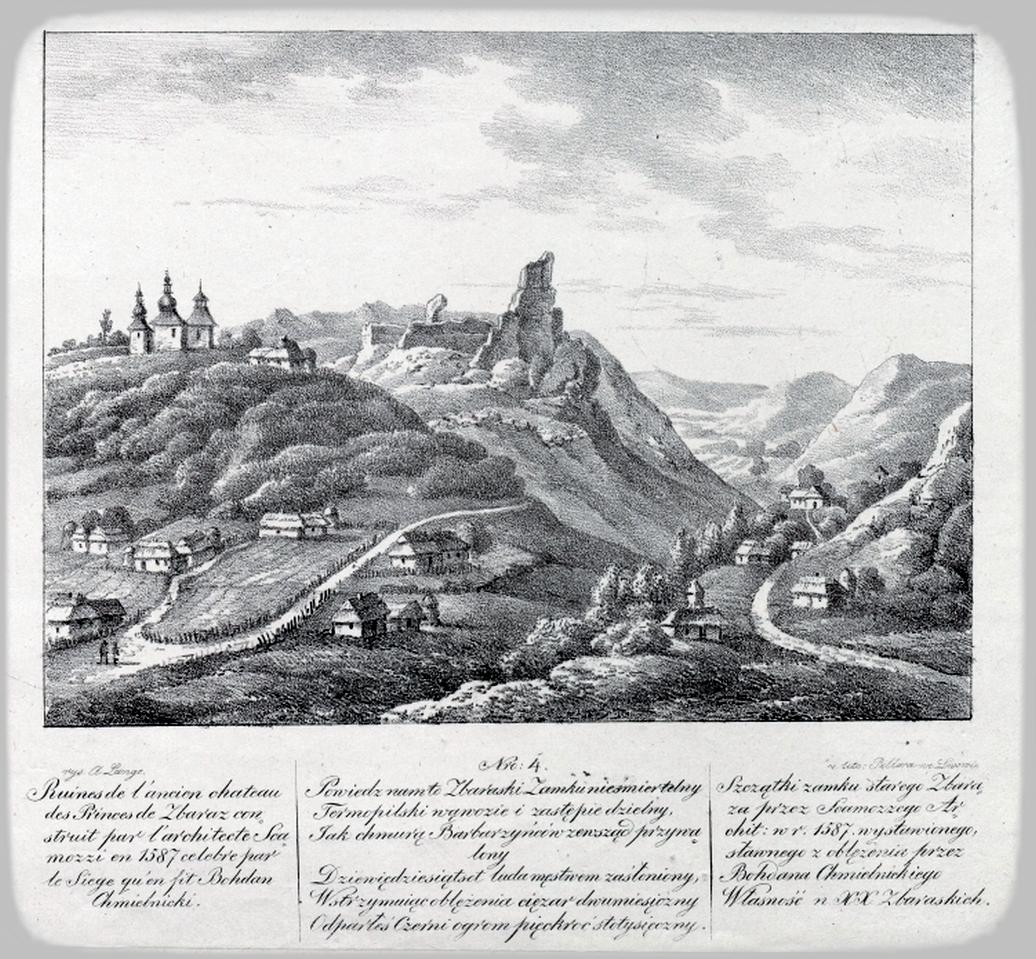
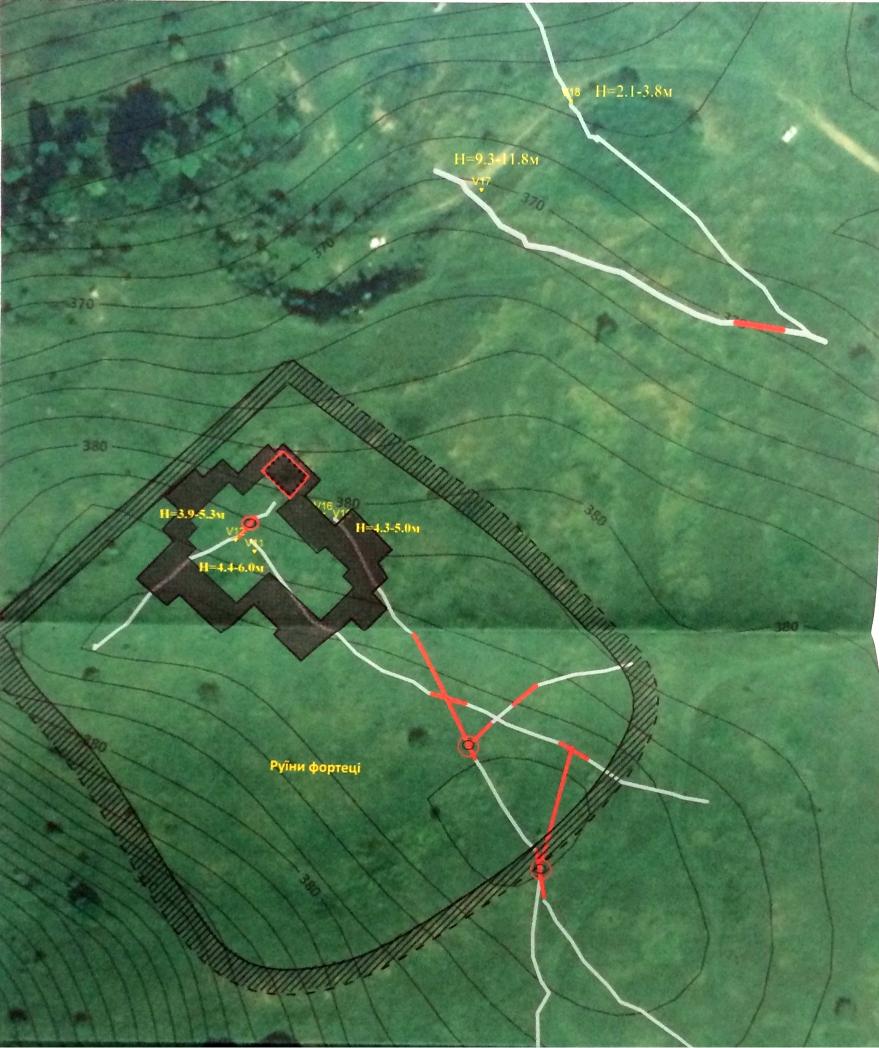
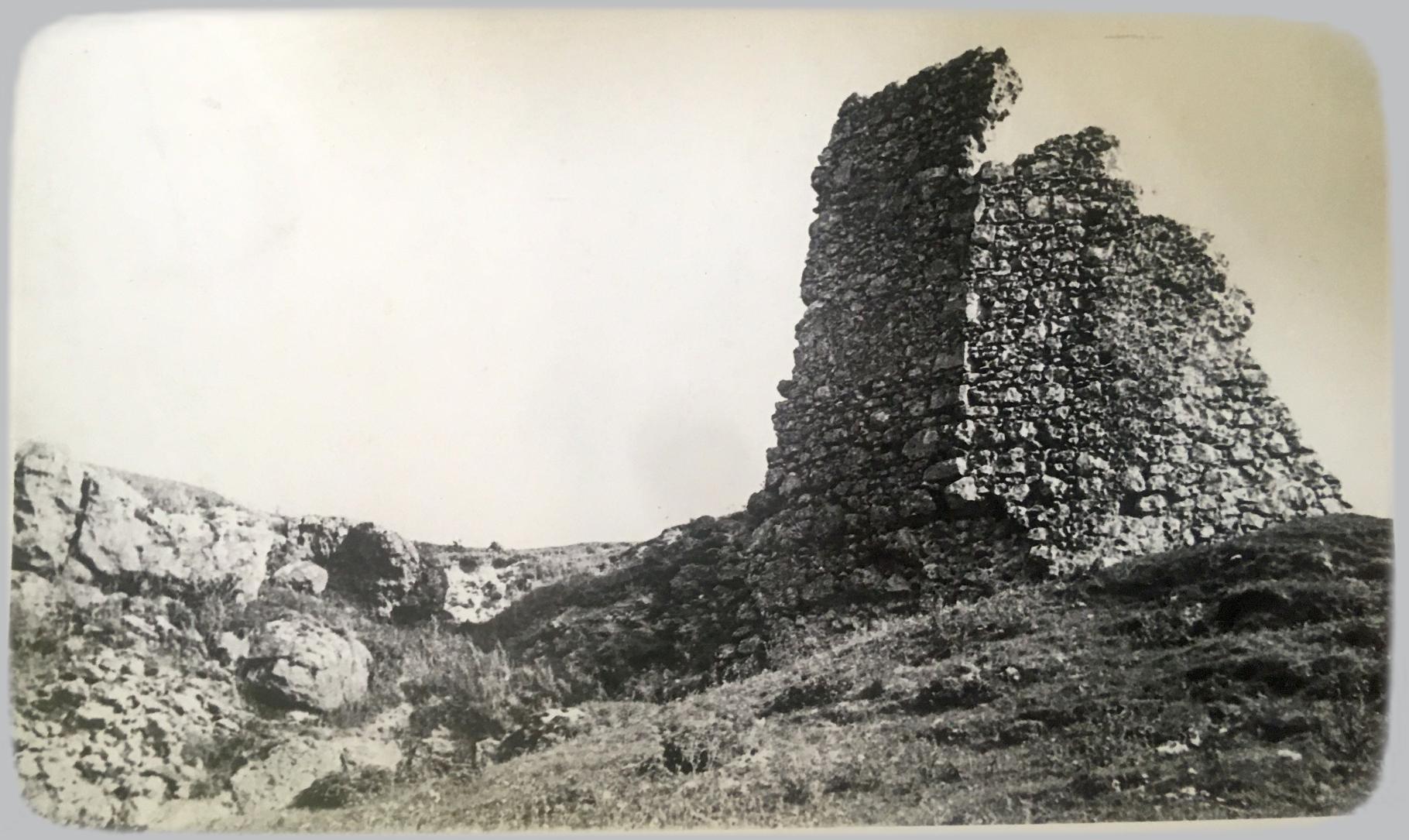
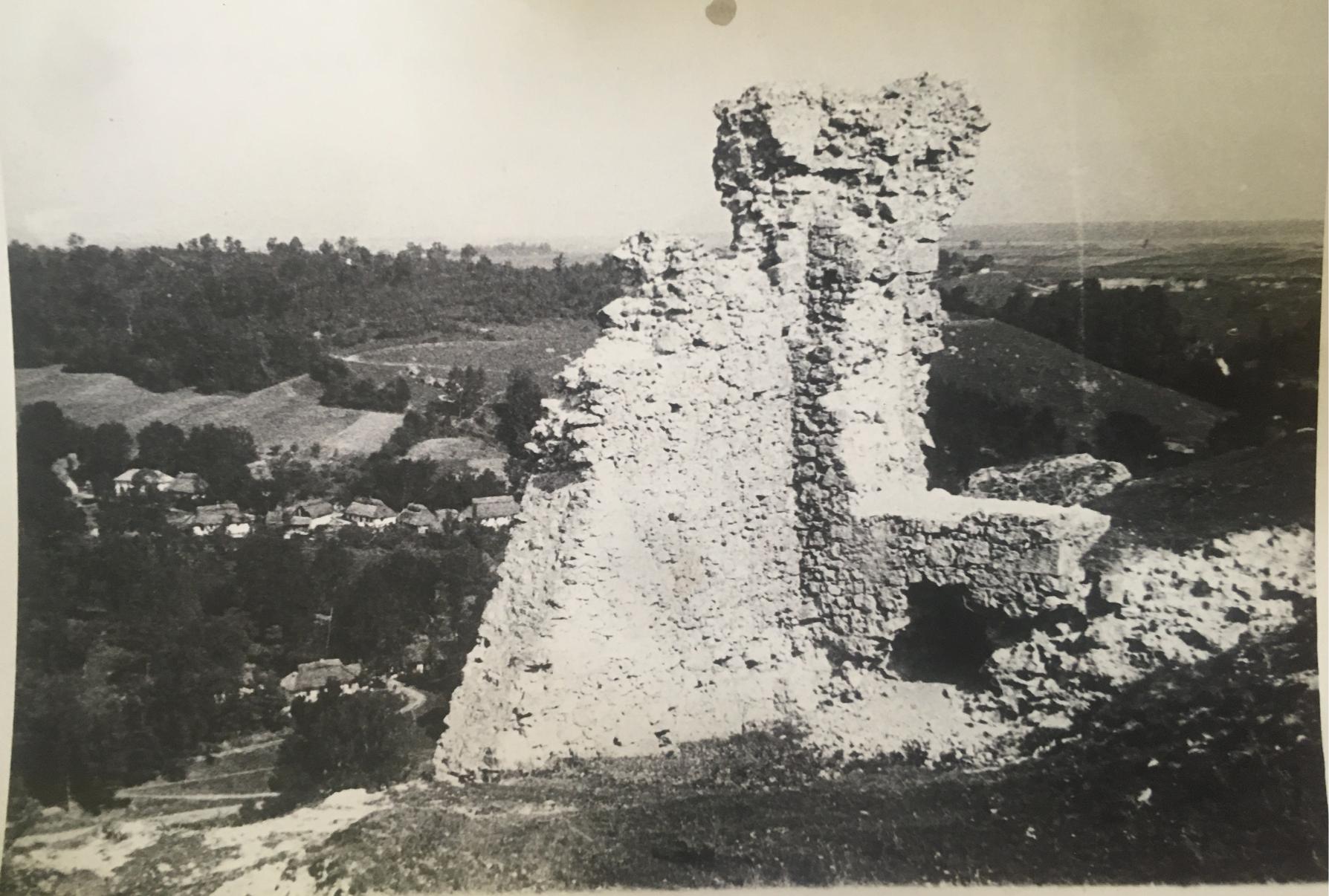
In 1830, the ruins of the castle were depicted in an engraving by Austrian artist Antoni Lange. The ramparts, ditches, battle platforms, and ruins of the castle were studied in detail in 1882 by archaeologist Adam Krikor, who published a comprehensive report the following year. He described: “The main high tower survived, rising 4.8 m above the castle grounds from the southwest, connected by walls of large stone blocks descending to the precipice above the Hniezna River, where they rise to a height of over 10 m. Near the hill, a doorway or window is still visible… After carefully clearing the cellar to the bottom, it was found to be 2.15 m high and 1.22 m wide. The castle stands on the edge of a great hillfort above a ravine leading to the Hniezna River. The hillfort, as the predecessor of the castle, now occupies a territory of about 200 m, intersected by ramparts and ditches. At a distance of 29 m from the castle is the first rampart, behind it a deep ditch 21 m long. Beyond it is the second rampart, 15 m high. Further lie massive ditches, irregular in shape, and beyond them, about 66 m away, an open space or battle platform. Then again a 15 m ditch, followed by a third high rampart 16 m long, then another ditch 5 m wide, and once more a 63 m-long platform. This platform is laterally intersected by two ramparts with a ditch between them. Finally, a fourth rampart encircled the hillfort, now badly damaged in places. It seems that this rampart originally surrounded the hillfort alone; all other ramparts, ditches, and pits were added later, when the hillfort was transformed into a castle with improved defensive works. The rampart, the stone blocks with carved openings, and the location above the river convincingly show that at first there was a hillfort here, which in later times was transformed into a castle. The stone castle was built when the population had grown, settled here permanently, and formed a town still known today as Staryi Zbarazh (Old Zbarazh).”
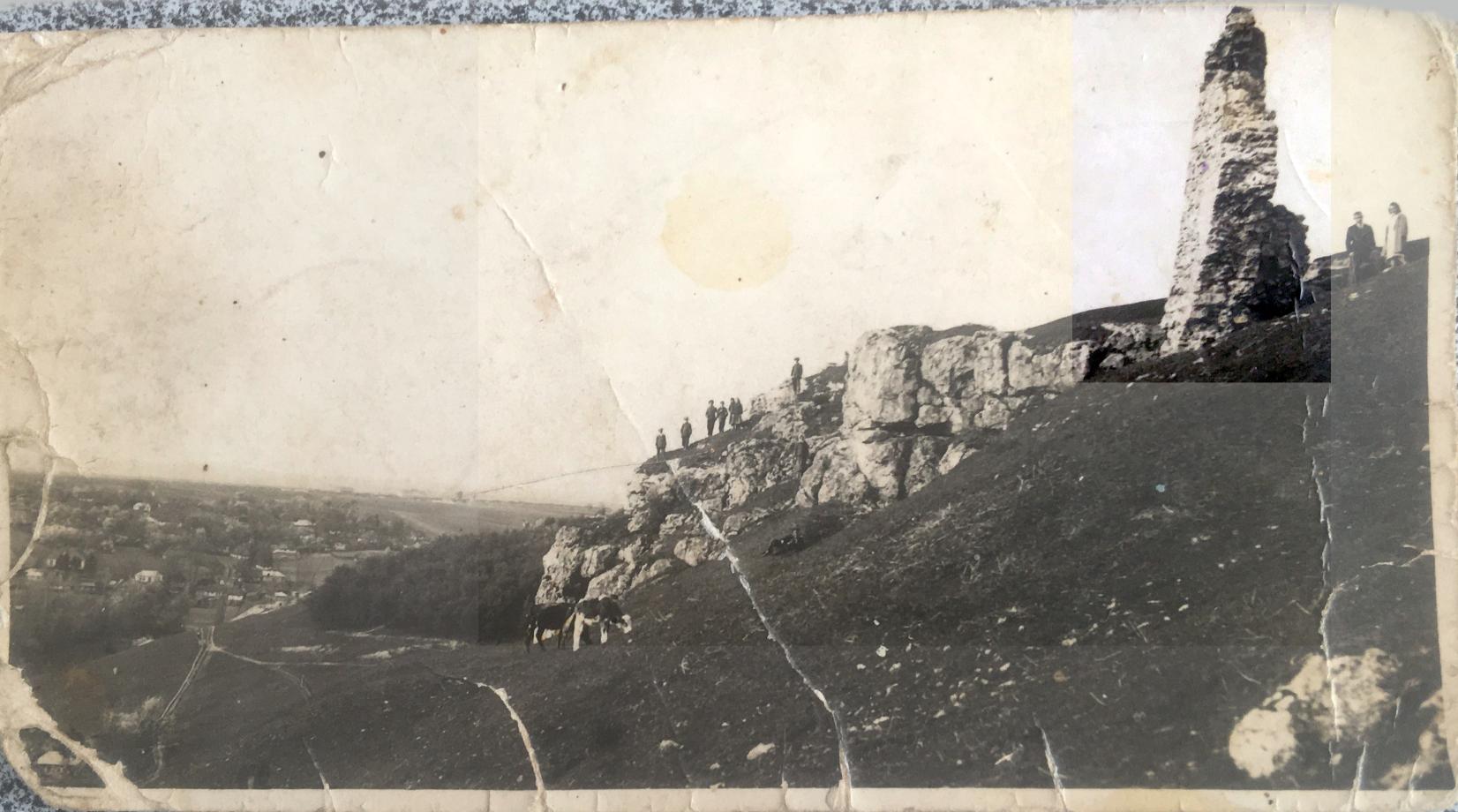
The ruins of the castle survived at least until 1948, when they were photographed on 23 September by photojournalist Ivan Vasylovych Sokolov. On the reverse side of one photo was the historically inaccurate note: “The castle was built in 1211 by the princes. Restored after the Tatar attack in the 15th century. Destroyed in 1474 under Vasyl Nesvizhsky, destroyed again by the Tatars in 1589 under Prince Janusz Zbarazky.” The photo shows the inner corner of the ruined gate tower with a rectangular entrance arch, against the backdrop of Dovbush Hill, Zaluzhzhia, and Zbarazh. Another photograph by the same author, entitled “Ruins of the Castle in Staryi Zbarazh,” depicts the fortress’s corner from the Hniezna River side, where a “cut corner” (angulus) is visible, a feature characteristic of castles of the 14th–15th centuries in Skala on the Zbruch and Yazlovets.
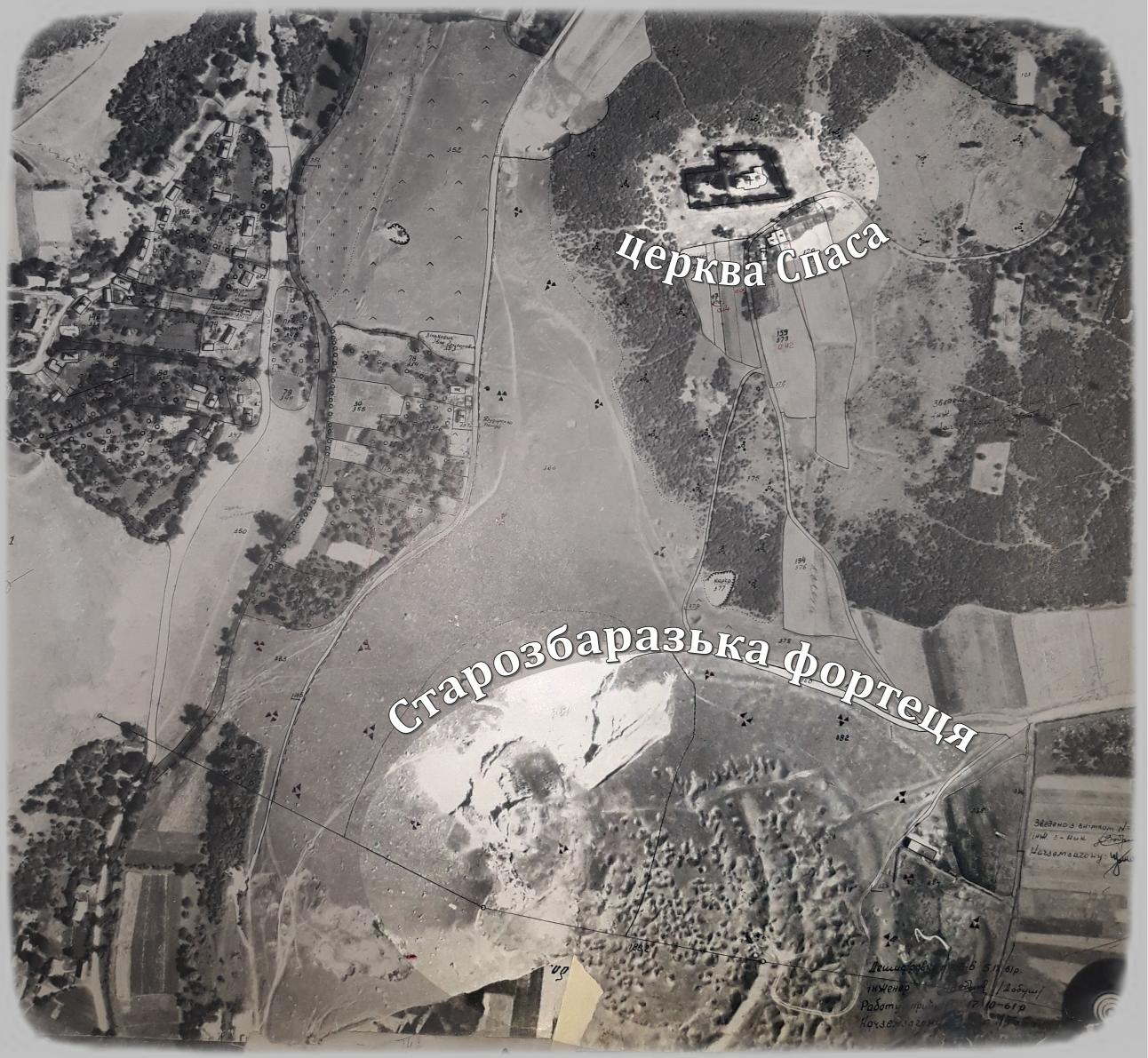
In the postwar period, aerial photography was conducted in 1957 to produce a topographic map (1:5000 scale) of the Zbarazh region, including the Medobory (Knyazha and Chernecha Hills). The fortress ruins were no longer visible, though ramparts surrounding the hillfort were still clearly distinguishable. The ramparts and ditches were destroyed in 1984, when plans for a summer cottage cooperative were considered, though later abandoned due to the presence of an animal burial site and soap works in the 1950s–60s.
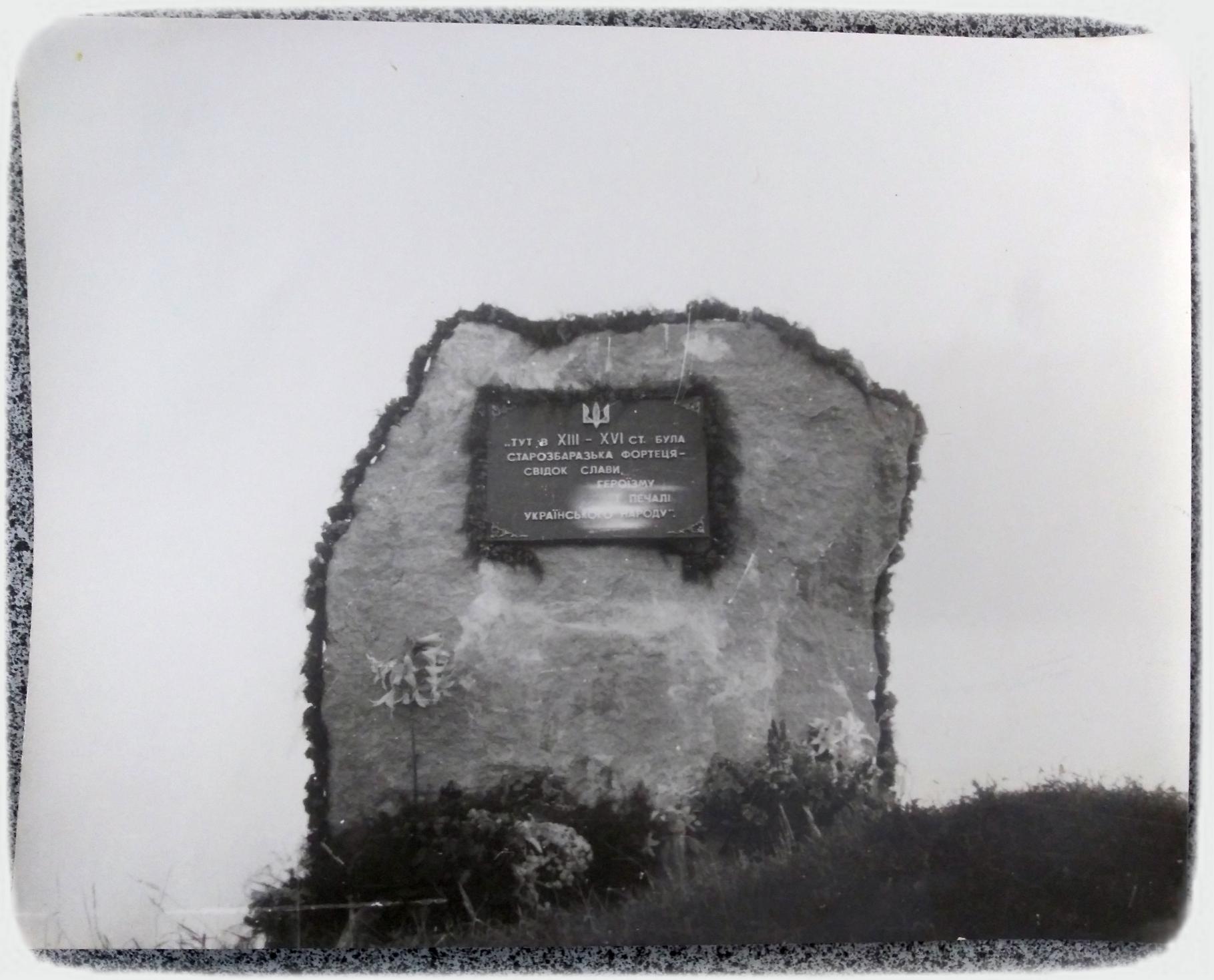
On 13 July 1991, for what was then believed to be the 780th anniversary of the first written (chronicle) mention of Zbarazh, a commemorative stone with a metal plaque was erected on the summit of Knyazha Hill. The inscription read: “Here, in the 13th–16th centuries, stood the Old Zbarazh Fortress—a witness to the glory, heroism, and sorrow of the Ukrainian people.” Later, a black marble cross was placed on the stone. Today, Knyazha Hill is a tourist location of “Chronicle Zbarazh,” frequently visited by tourists and the youth of our city.