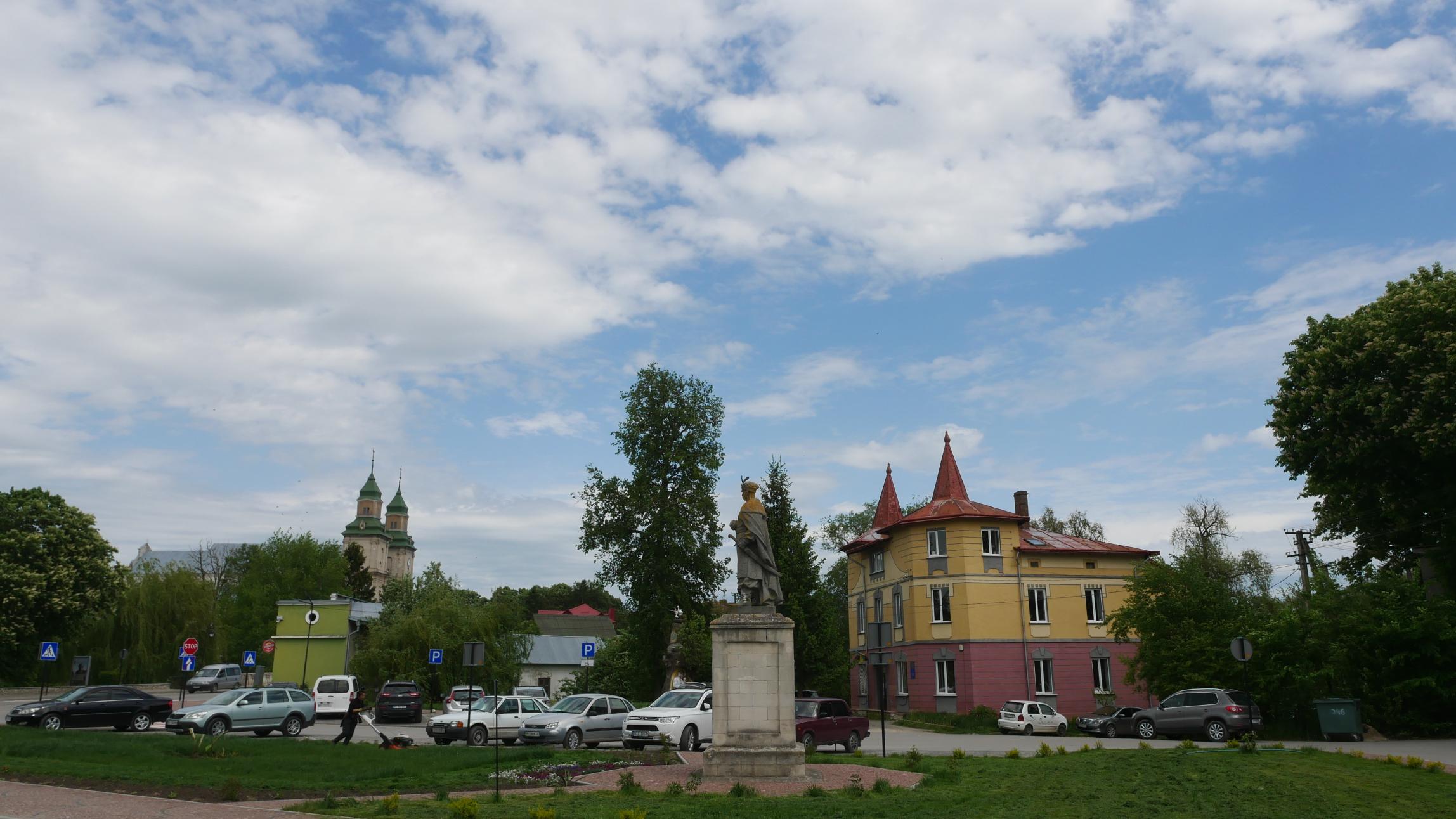
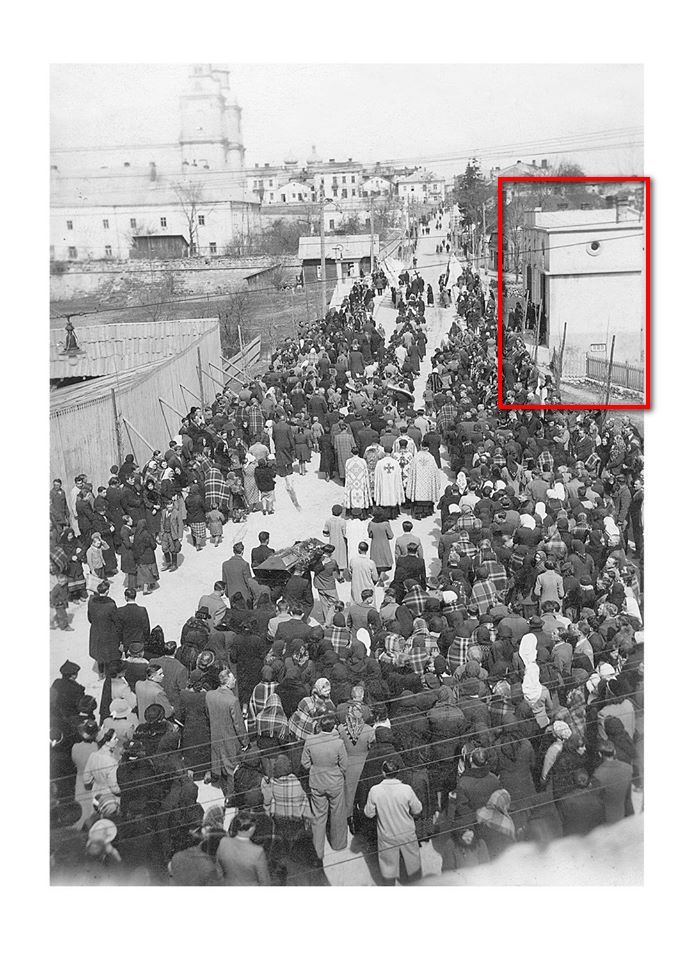
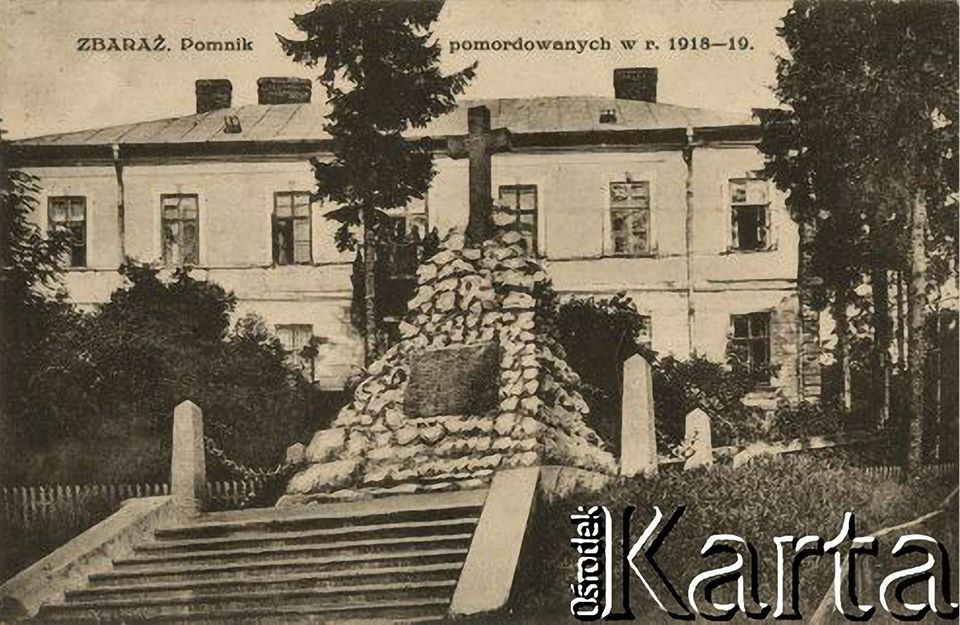
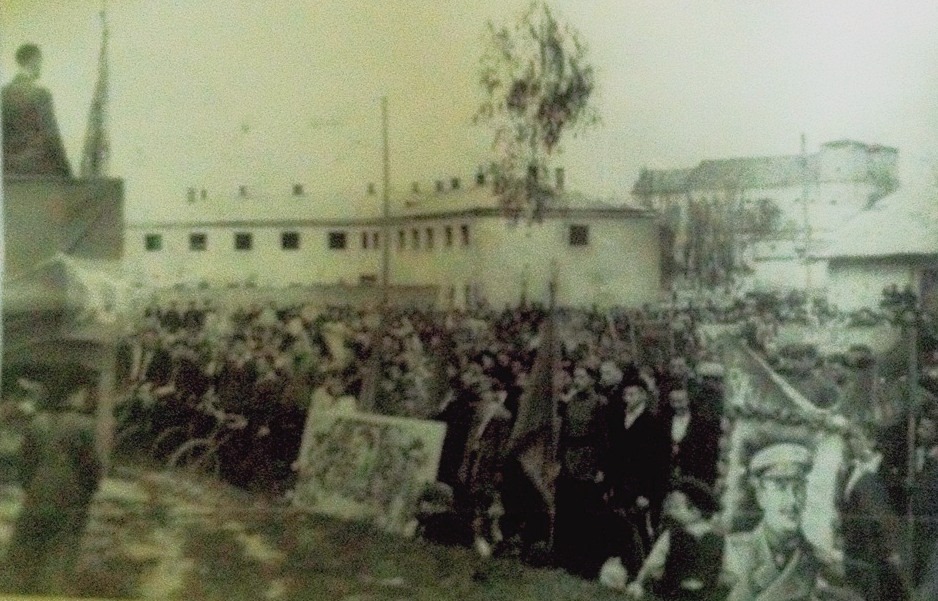
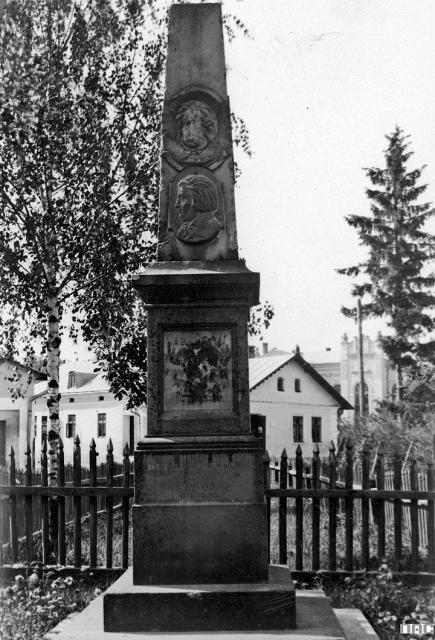
On the left bank of the Hnizna River, opposite the “Black Bridge,” between “Horbo” and “Pidzamche,” the so-called “Polish Quarter” began to take shape in the 18th century. In the middle of the square, around which stood mainly the administrative and cultural-religious institutions of the Polish community of the town, a monument was erected in 1898 to mark the 100th anniversary of the birth of the poet Adam Mickiewicz. The monument featured a bas-relief profile of the poet and the titles of his works. It was damaged and thrown into the river during the establishment of the Western Ukrainian People’s Republic in 1919, but was restored in 1920 by General Władysław Jędrzejowski, commander of the 5th Lviv Division. Later that same year, the monument was destroyed again by the Red Cossacks of Vitalii Prymakov. After the withdrawal of Soviet troops from Zbarazh, however, townspeople and the 51st Regiment restored it once more, and it was solemnly unveiled on June 29, 1921.
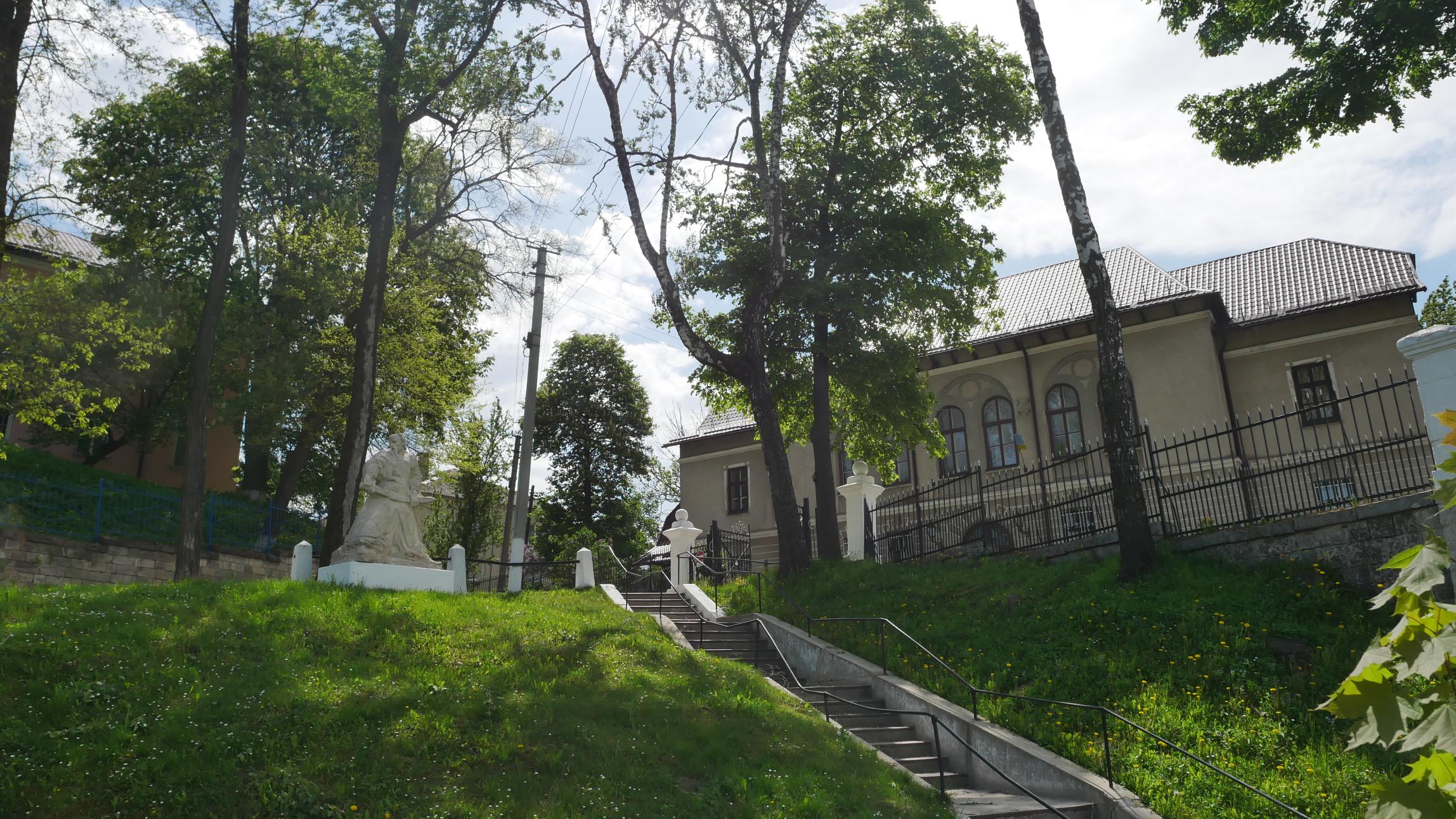
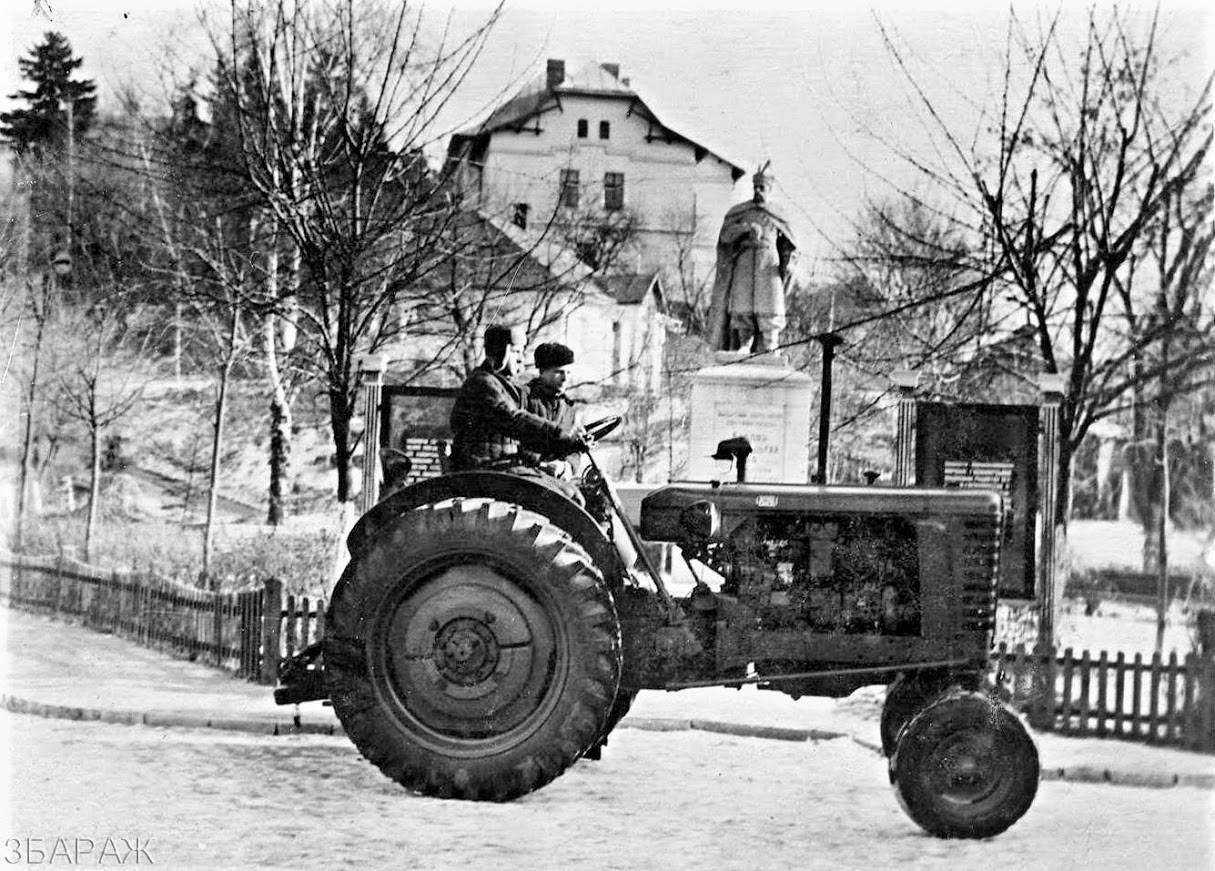
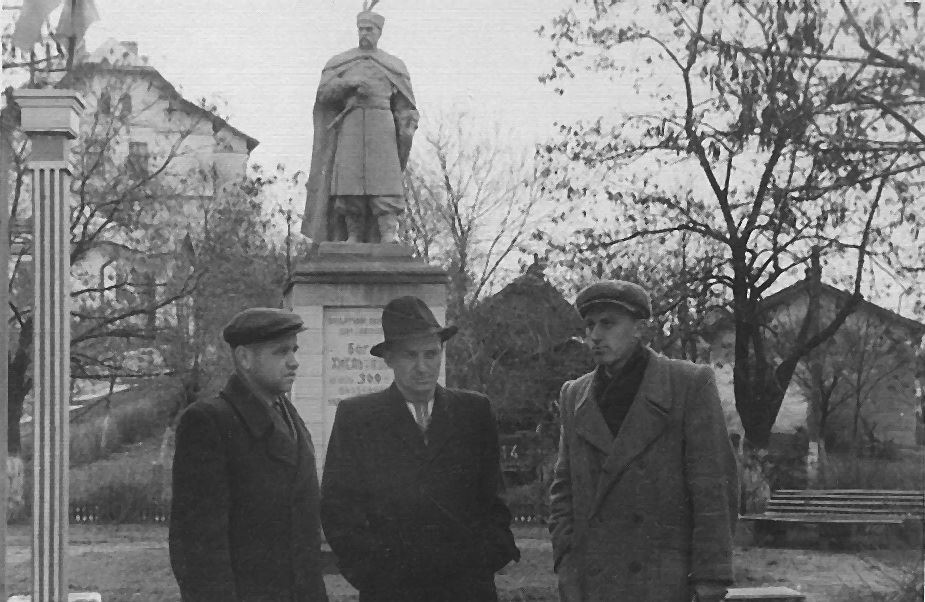
In 1954, the monument to Adam Mickiewicz was relocated to the Castle Park to make room for the monument to Bohdan Khmelnytsky, erected on that site to mark the 300th anniversary of the Pereiaslav Agreement. As the inscription on its lower pedestal testifies, the Mickiewicz monument was restored in 1970 and again in 2015 (by Polish restorers under the direction of Professor Janusz Smaz). Around the monument, moving counterclockwise, the following buildings and structures were erected in different periods.
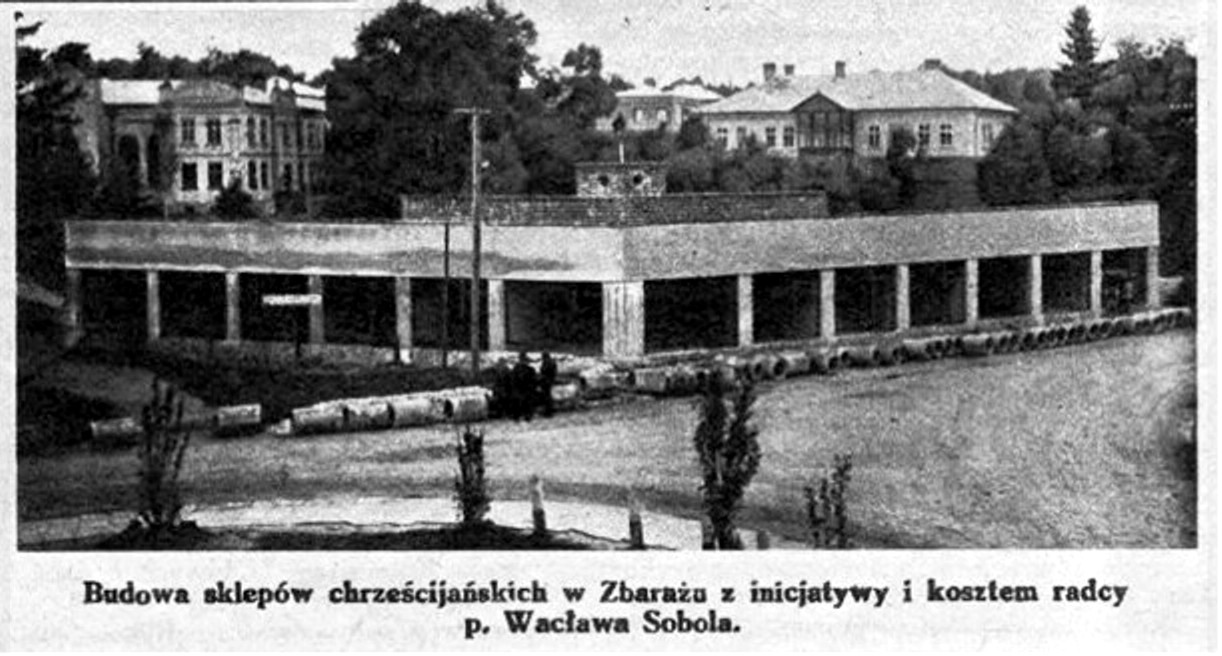
To the left of Bohdan Khmelnytsky stands the former Polish-Ruthenian commercial center known as “Sobolivka,” constructed in the first half of the 1930s on family parcels owned by Zbarazh notaries Wacław and Franciszek Sobol. It was conceived as an alternative to Jewish retail trade in the town center. The Polish press of that time wrote: “The Ruthenians began to build large warehouses and granaries for grain, the Dairy Cooperative will construct a large county dairy, the Beekeepers’ Society — a new large honey-processing house, the People’s School Society — its own building with a large hall, and several Polish families began to build residential houses and villas. The scale is impressive. God grant that … the glorious historic Zbarazh should cease to be the dirty, typical Jewish town it is today.”
Henryk Śląski, head of the Zbarazh branch of the Podolian Ethnographic Society, wrote in his 1934 book “Zbaraż w przeszłości i teraźniejszości. Opis historyczno-krajoznawczy powiatu” that: “…in the Ternopil suburb, among picturesque houses surrounded by gardens, stands out the large building of the ‘Sokół’ society and the so-called ‘Sobolivka,’ which houses the County Command of the State Police and the local police post…”
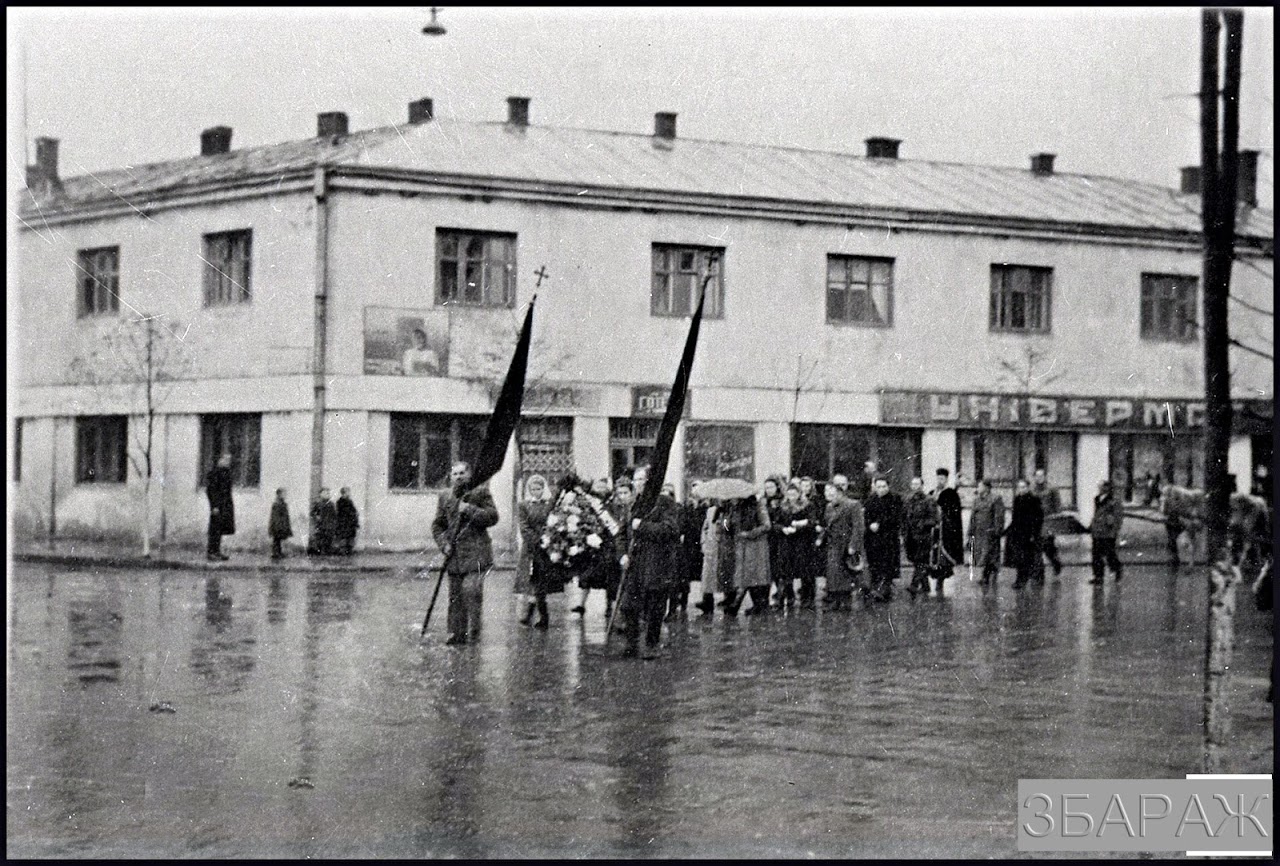
During the Soviet period, this building functioned as the “Hostynka” hotel and café, popularly known as the “Lower Tea House.” Today, it serves as a multipurpose commercial establishment and residential space.
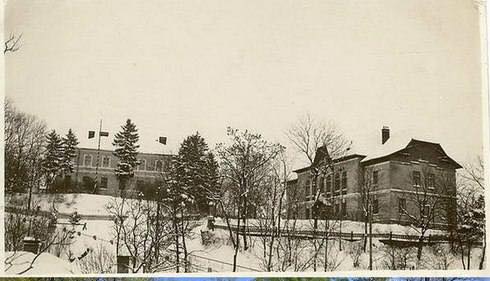
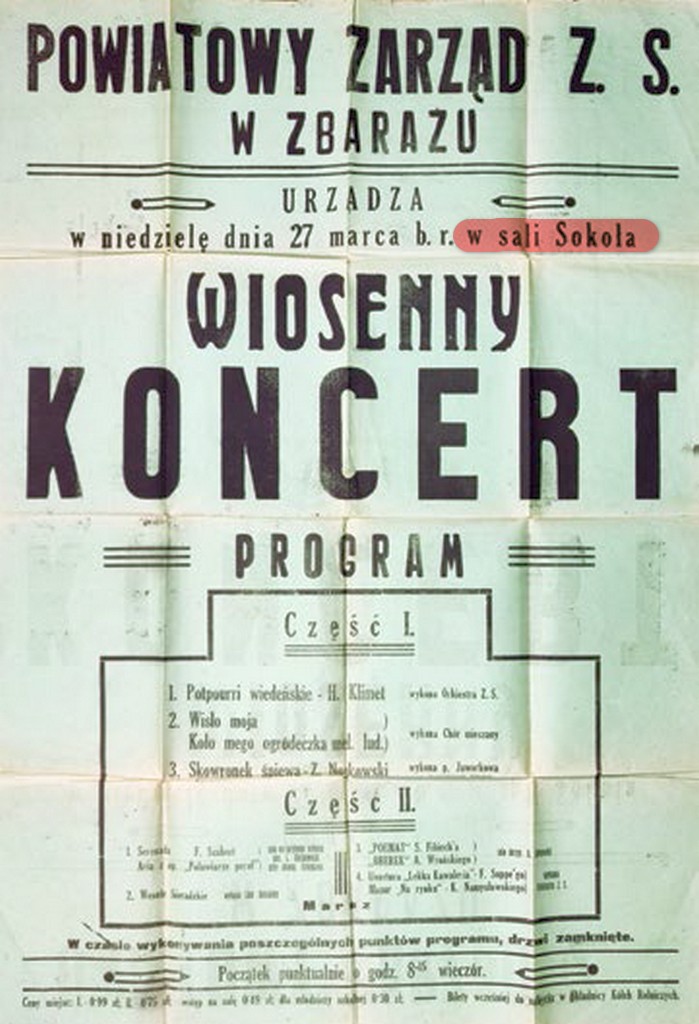
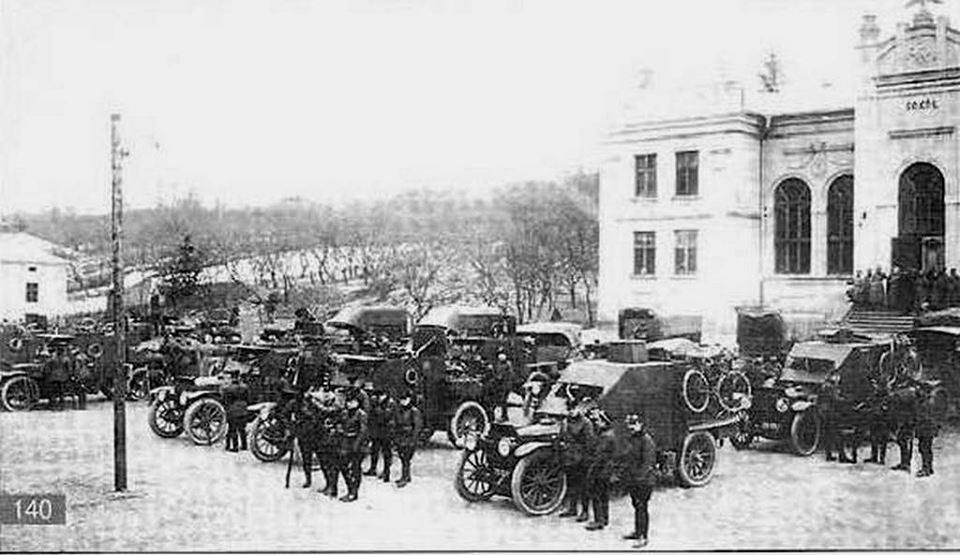
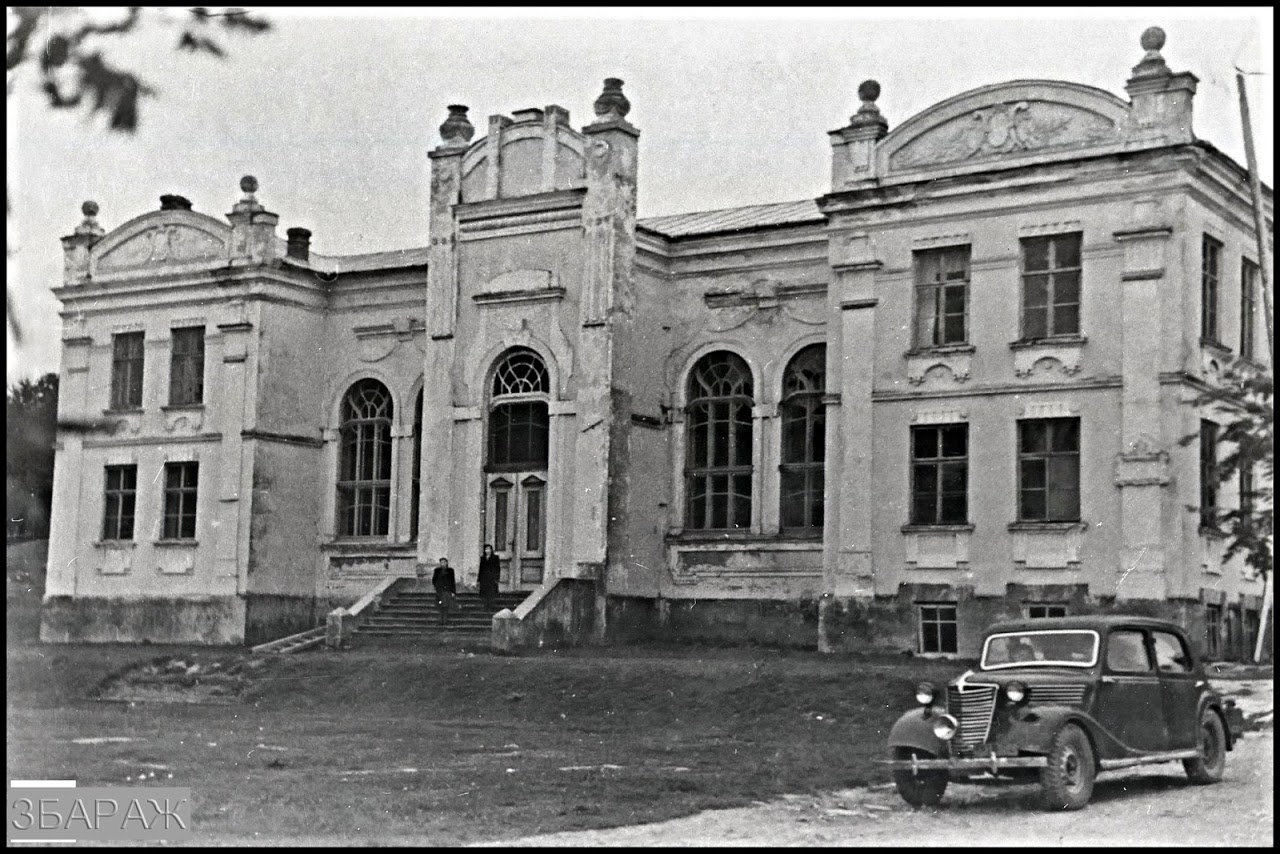
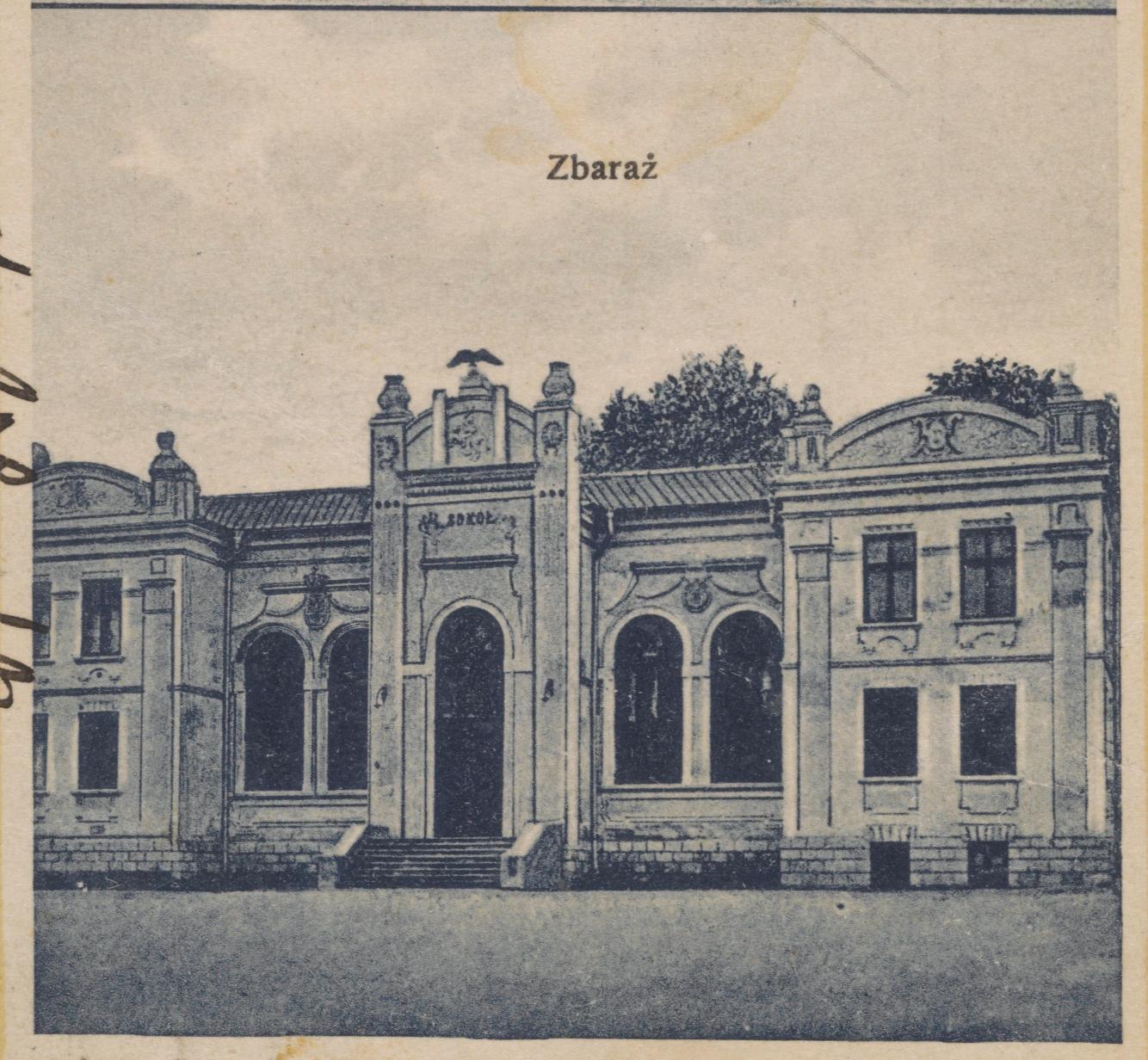
Behind “Sobolivka” is the impressive building of the former Polish sports and gymnastics society “Sokół.” Its construction began in 1908 with the support of Antoni Durski, a native of Zbarazh, leader of the “Sokół” society in Galicia (1892–1908), and editor of the Przewodnik Gimnastyczny “Sokół.” The Archives of the Zbarazh Convent reported: “On June 2, 1910, the dedication of the local Sokół building took place. The consecration was carried out by prelate priest Wolesław Dr. Twardowski, dean from Ternopil.”
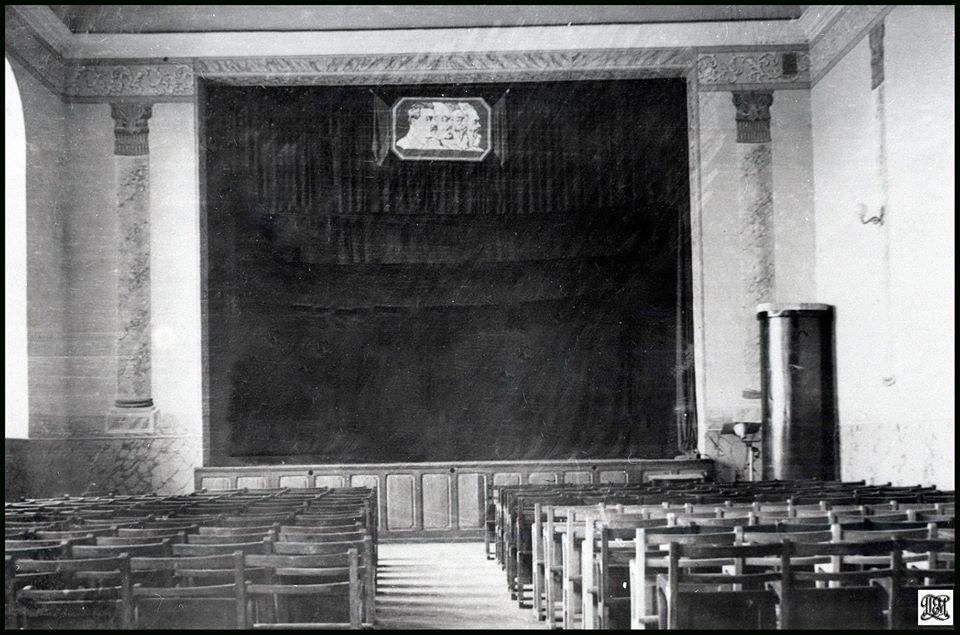
During 1914–1917, the building served as headquarters and field hospital for the Belgian armored division ACM, quartered in Zbarazh during World War I. In the 1920s and 1930s, the “Sokół” building, which had several small halls and one large one, became a cultural center not only for the Polish community but was also used for Ukrainian and Jewish events. In 1940, it became the Zbarazh County (later District) House of Culture, with a library, theater studio, choral chapel, and more. Today it houses the Center of Culture and Leisure of the Zbarazh community.
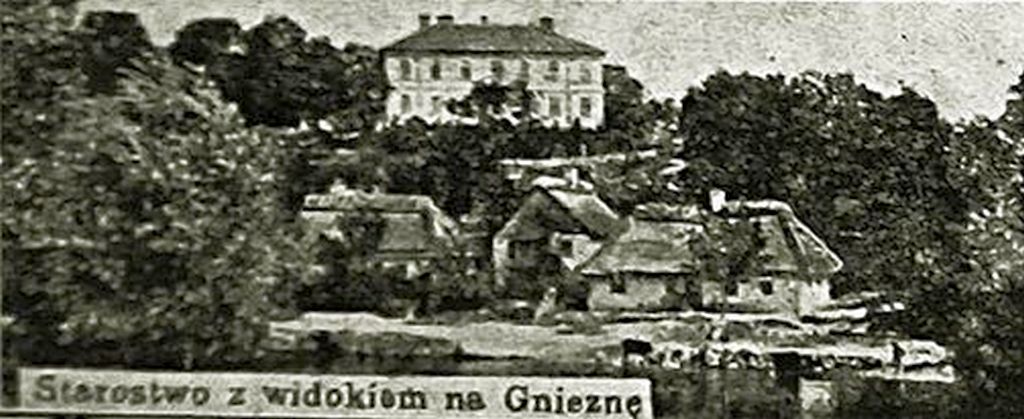
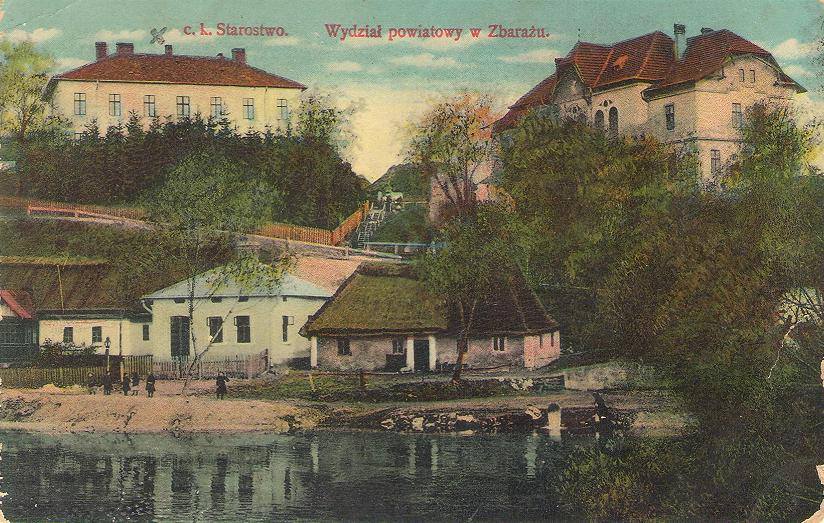
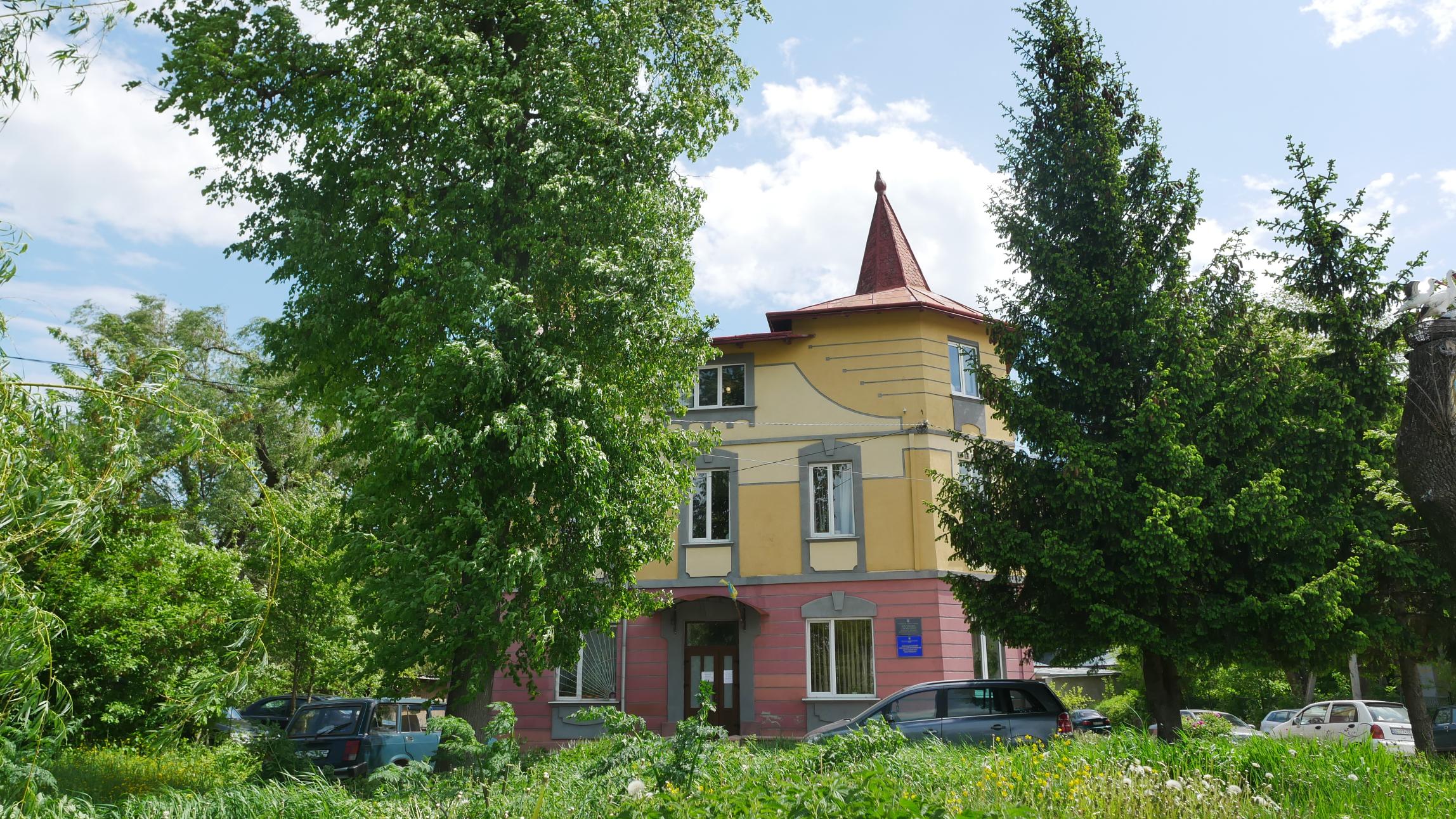
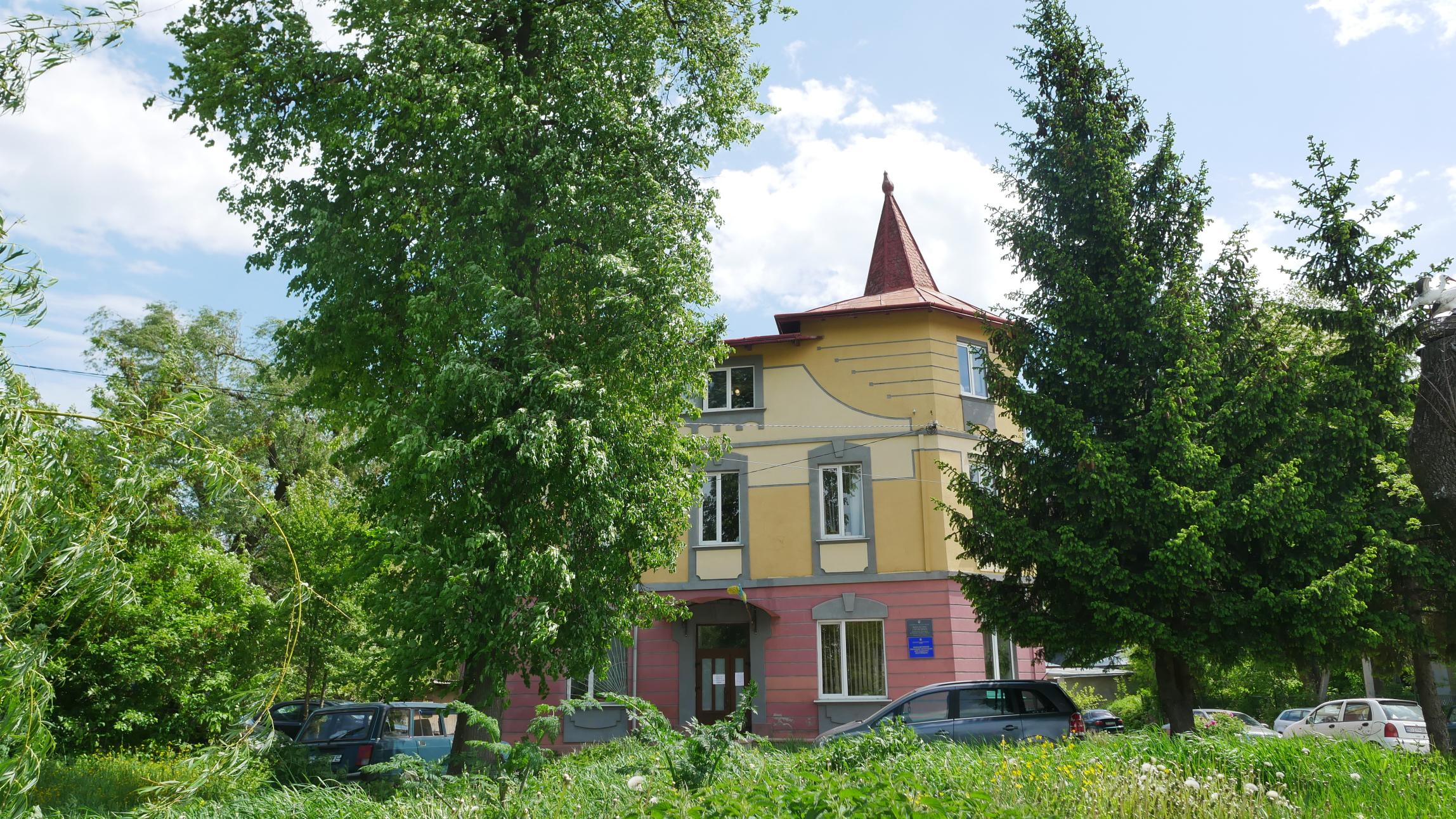
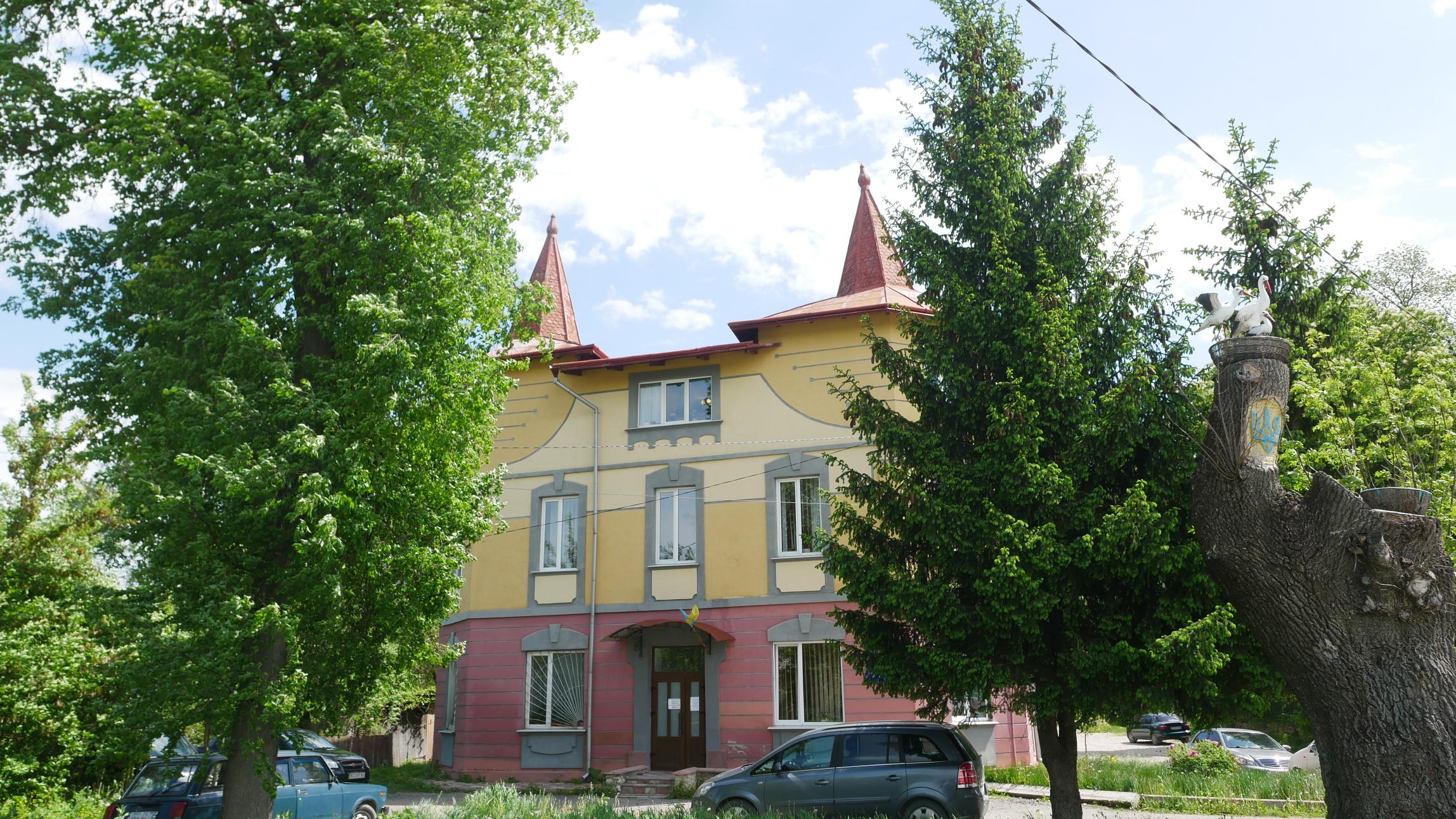
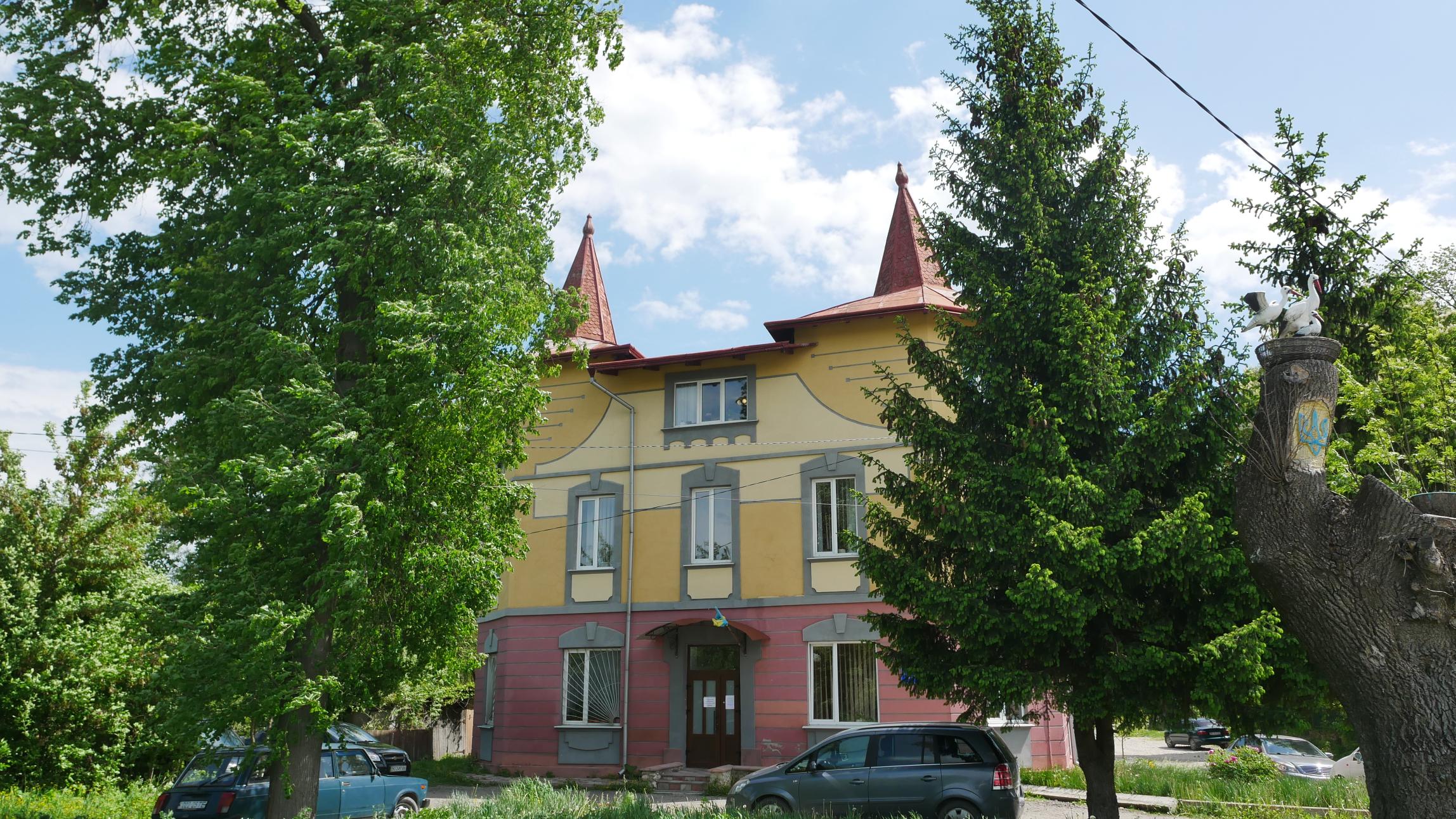
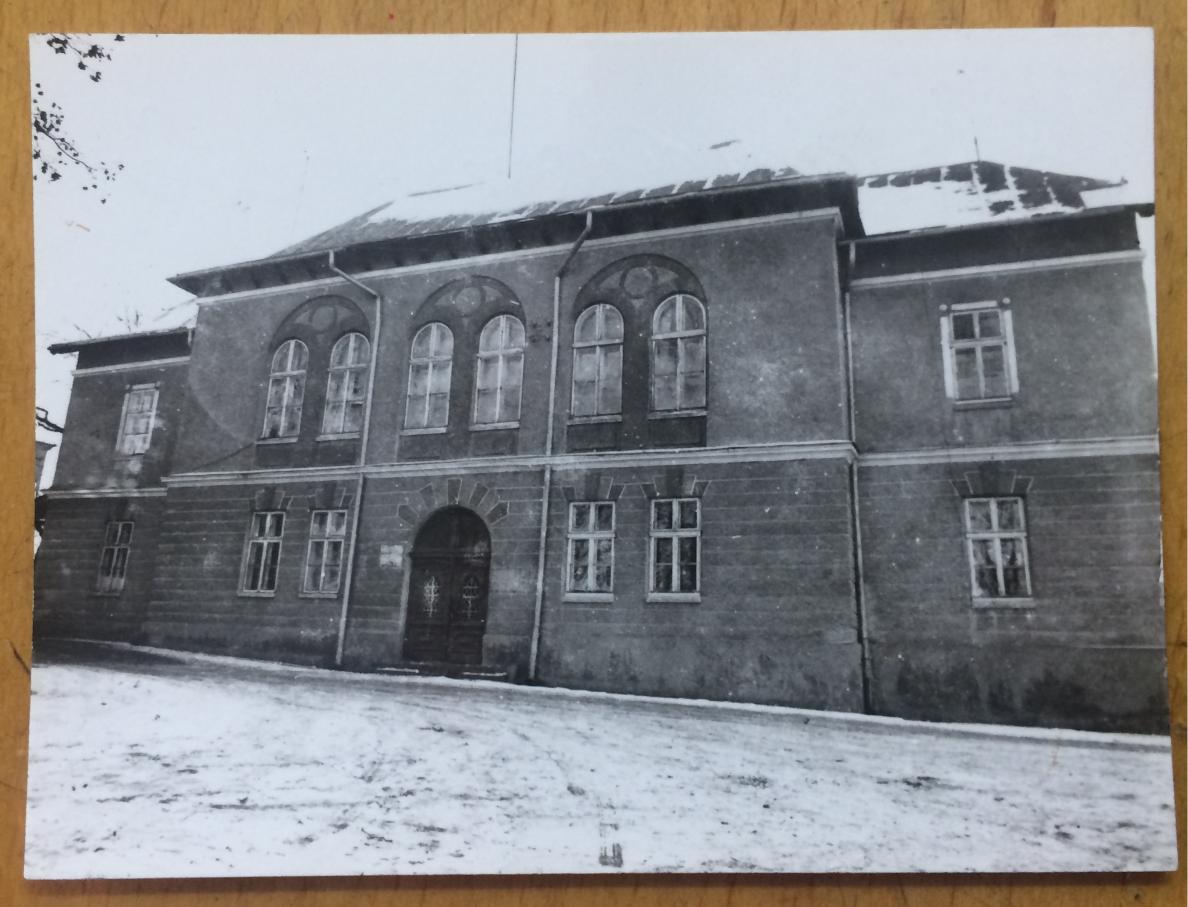
Moving counterclockwise up the hill, we find three buildings known as the “Three Houses of Pidzamche.” The first is the “second” County Starost’s House, built around 1906 by future owner and mayor of Zbarazh Emil Jawetz. According to NKVD interrogation protocols, he had built “two large houses, which he rented out, one to the Polish court, and the other to the COUNTY STAROST.” The newspaper Dilo reported on September 15 (28), 1905: “The county board in Zbarazh intends [within one year] to build its own house for county representation.”
Throughout its history, this building housed the Zbarazh Revolutionary Committee, the District Committees of the Communist Party (until 1973), the District Agricultural Department, the Dniester Historical-Architectural Reserve (DIAZ), and the editorial office of Kolkhoz Life newspaper (until 1990). Today it accommodates the administration of the State Reserve “Castles of Ternopillia.”
The second of the “Three Houses” was the County Court and prison (now the military commissariat), while the third, built earliest, was the “first” County Starost’s House, later the County Treasury Office, and now the police department. Each has its own unique history, but the format of this publication does not allow for a full account.
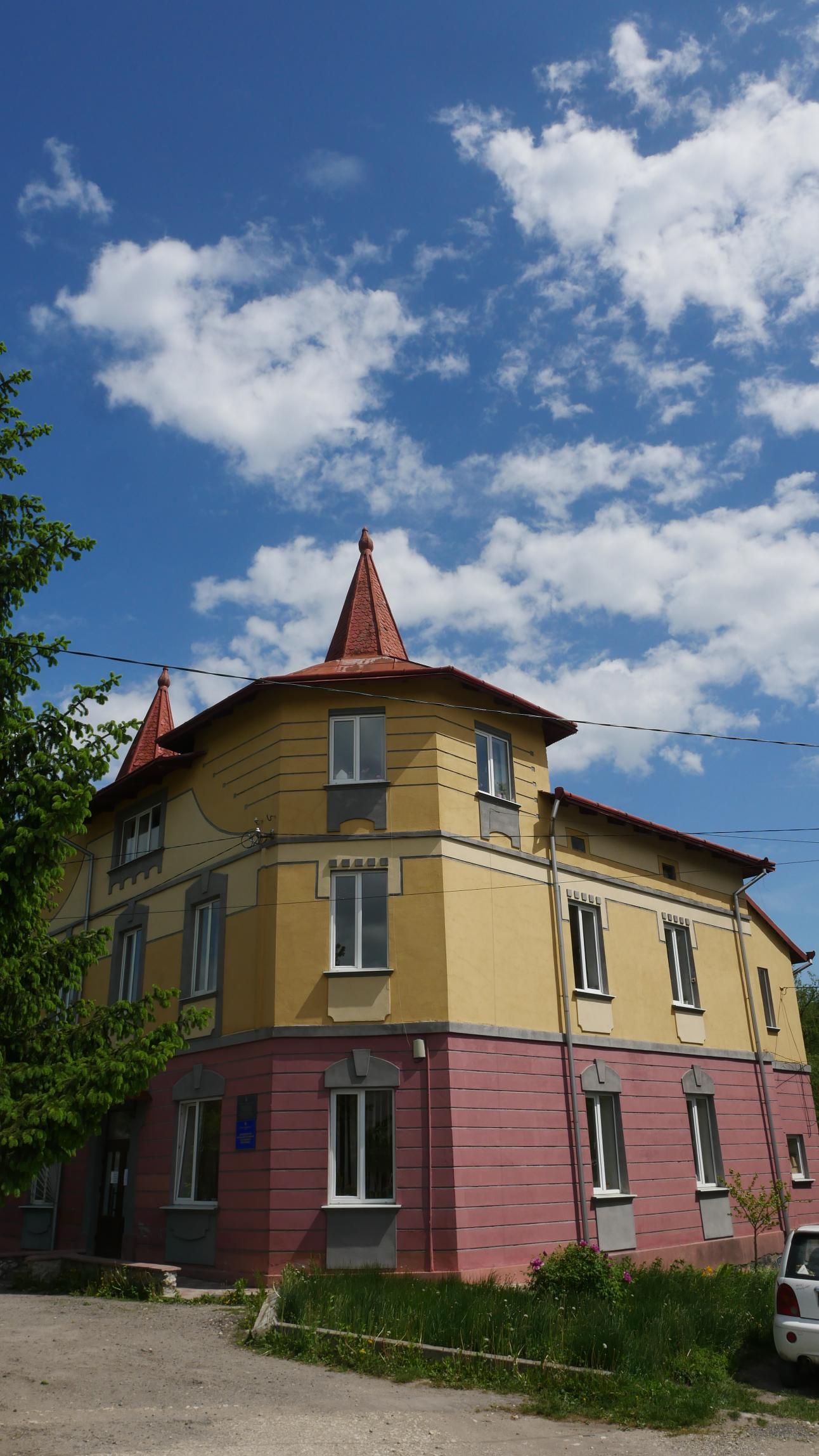
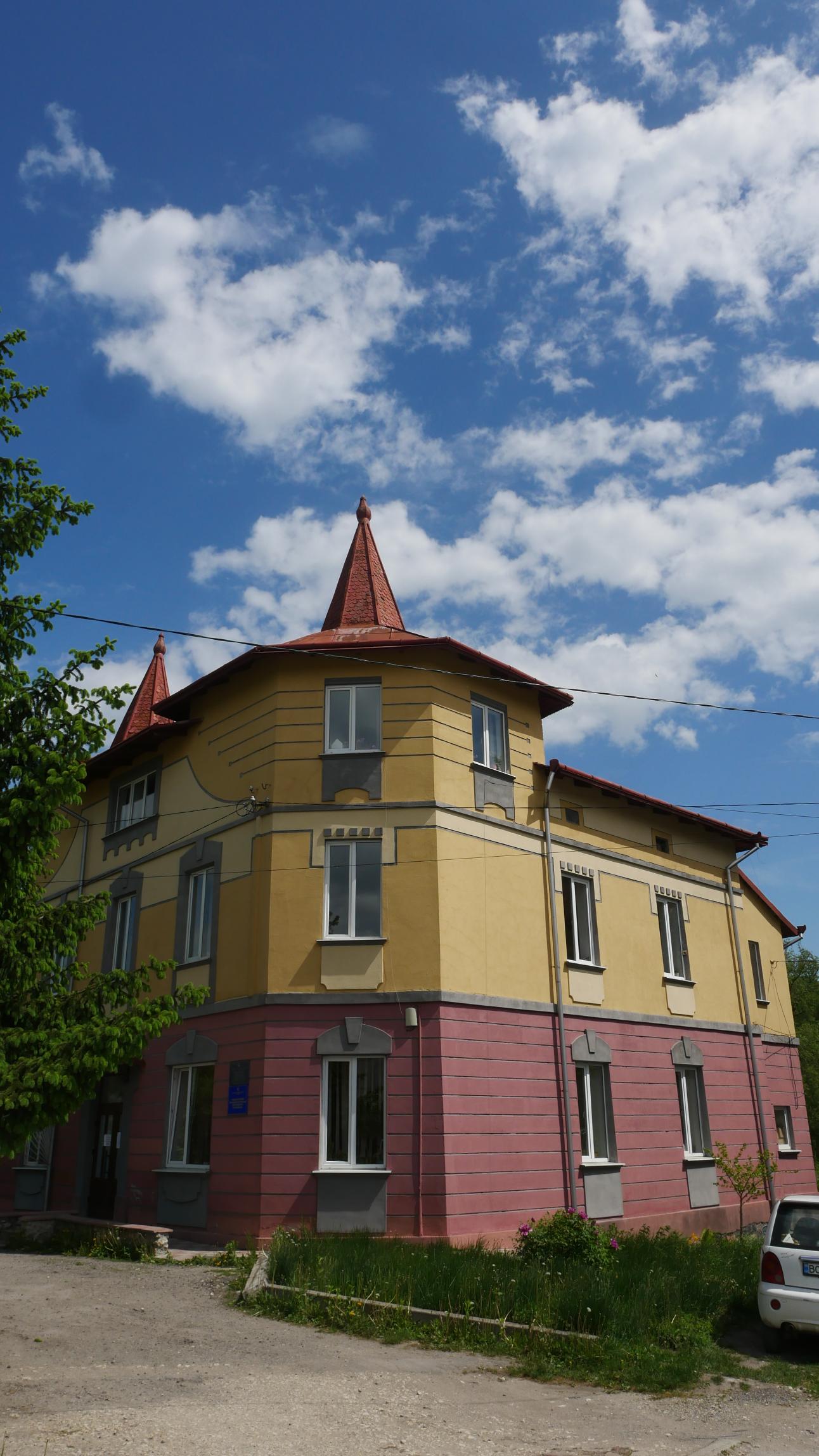
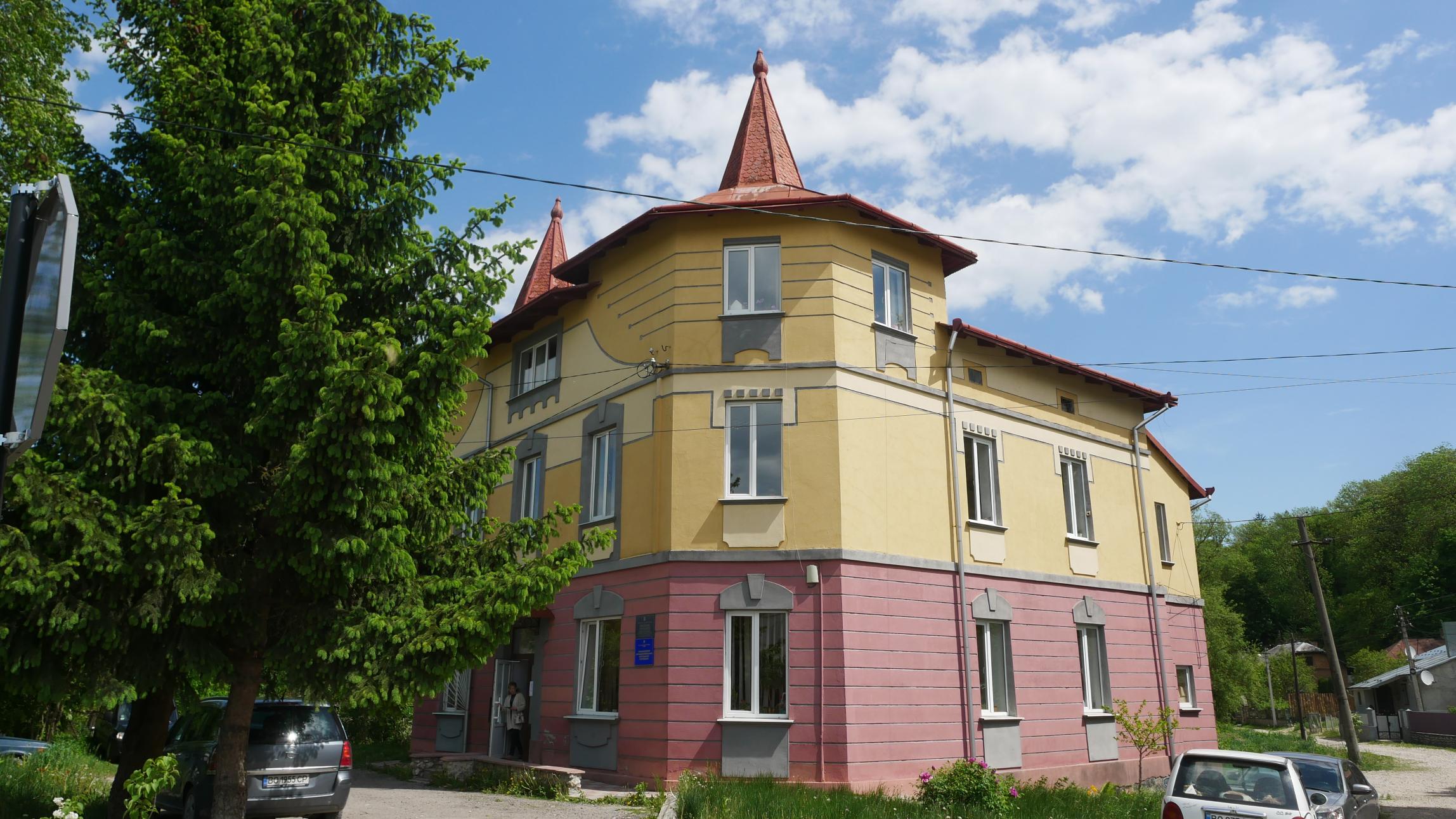
The next building of the “Polish Quarter” is the former hotel-restaurant complex “Bristol,” founded by Mieczysław Gertrich-Wolenski, who lived at 18 Shashkevych Street (now Stus Street) and worked as a state notary in Zbarazh from 1920 to August 31, 1939. During this period, architect J. Stankiewicz built the mansion in the Art Nouveau style. Over time, it housed “Madame Rudzikowa’s Restaurant,” Wolenski’s notary office, a kolkhoz office, the Pioneers’ Palace (with a photo club, chess section, art studio, etc.), the district finance administration, and today — the community archive and other institutions.
The notion of the “Polish Quarter” is a purely conventional term, since among the predominantly Polish administrative, economic, cultural, and sports buildings, there were also structures belonging to other national groups. For example, next to “Bristol,” near the old “Black Bridge,” stood the so-called “Frenkel Tavern.”
The Sanitary Commission Protocol in Zbarazh of October 10, 1935, compiled by a commission chaired by Deputy Starosta Stanisław Zajec, with mayor Antoni Titz, county doctor Julian Popiel, city doctor Ludwik Landau, council deputy Dr. Boruch Pudles, deputy mayor Michał Schuber, city guard Aleksander Marecki, and others, required in clause 4 that “Aron Frenkel must clean the plot between the Hnizna River and his house of weeds and stones.”
In the 1930s, among the owners of establishments licensed for alcohol trade (“wyszynk trunków”), were listed M. Altsher, H. Berlas, A. Engel, K. Kofler, F. Segal, A. Frenkel, and others.
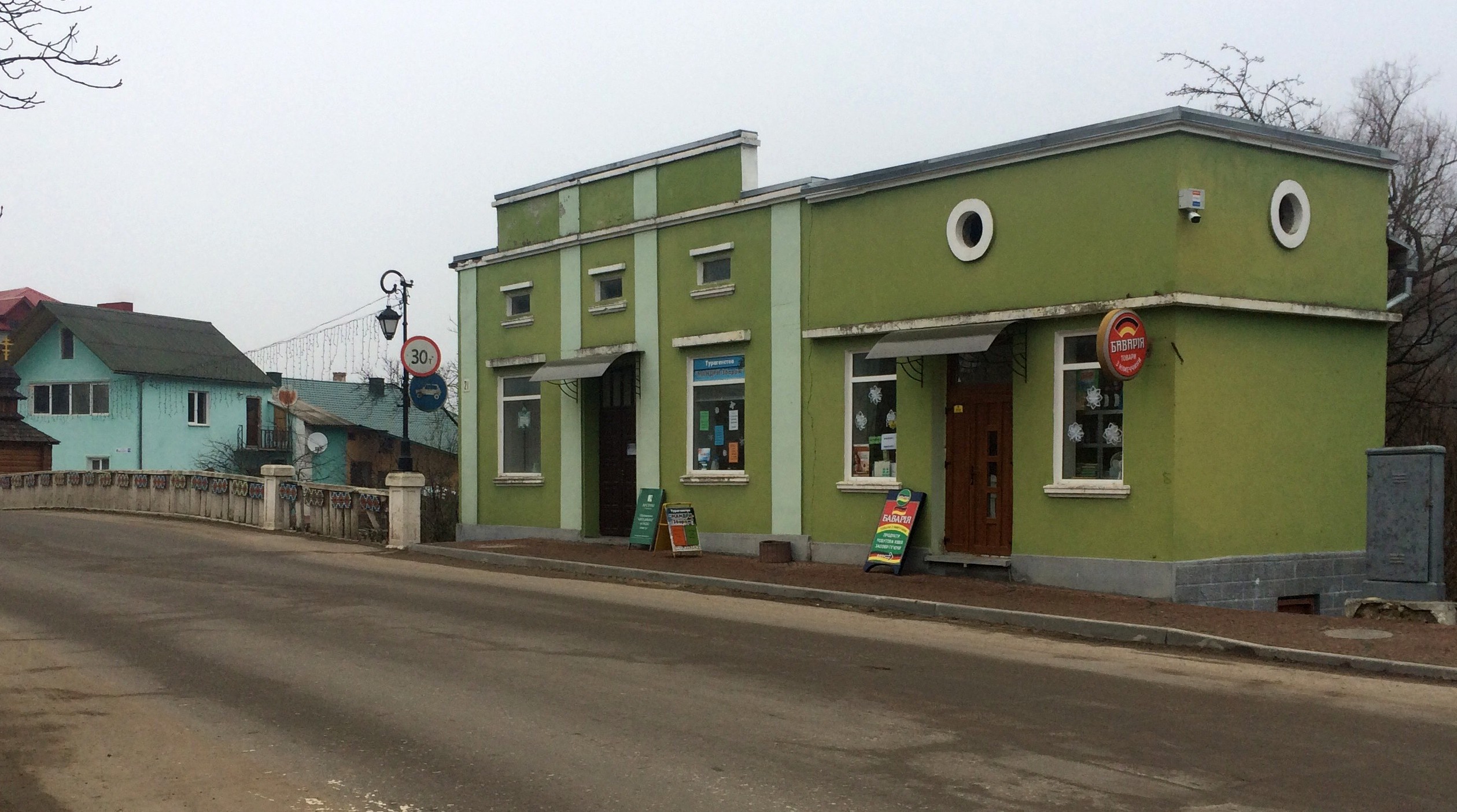
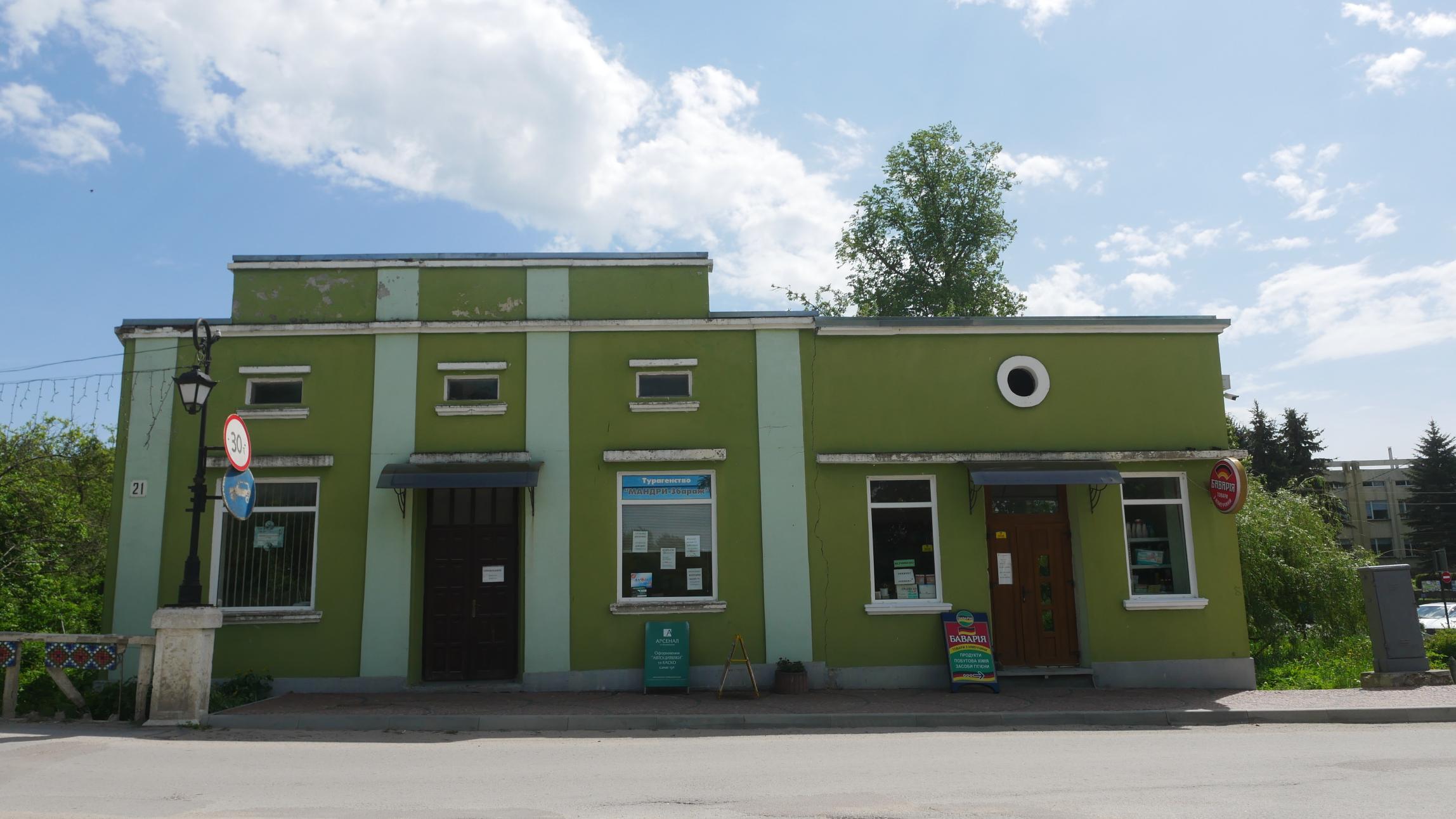
During the construction of the concrete “Black Bridge” across the Hnizna (documented in the case “On the Construction of a Bridge over the Hnizna River in Zbarazh” covering the period May 27, 1930 to January 30, 1932), it was necessary to obtain permits from the owners of adjacent buildings, including Frenkel’s tavern. As the embankment was raised for the new bridge (the flood of 1906 had already raised the water level by almost 3 meters), riverside buildings, including Frenkel’s, were left significantly below ground level. In addition, the central entrance, oriented to the old road, ended up at the rear, requiring the opening of a new entrance on the opposite side. The state partially accommodated owners’ demands and paid reasonable compensation (though not the 10–20 thousand zlotys they had demanded). Instead of raising Frenkel’s tavern to the new higher level, stairs were built leading down around the building.
During World War II, one half of the building housed the private industrial goods shop of Petro Adamovych; in the Soviet period it contained the Civil Registry Office and the Hunting and Fishing Society. Today, it accommodates the travel agency “Mandry” and a tailoring workshop producing and repairing clothing, including the sale of embroidered shirts.